Two Rivers Resilient Waterfront Project
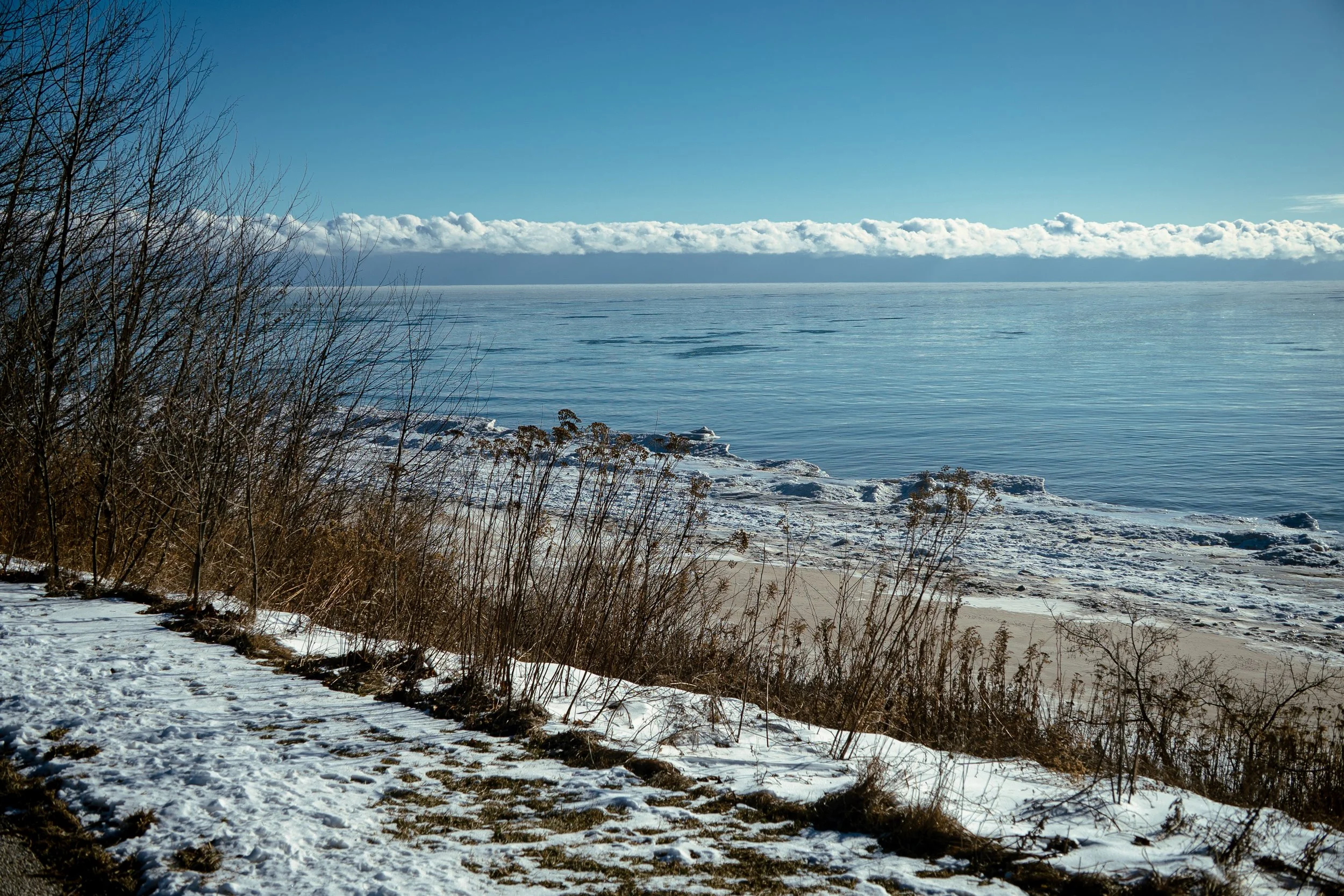
In partnership with the Great Lakes & St. Lawrence Cities Initiative, Stantec, and the City of Two Rivers, LNRP has been working to bring resiliency back to the shore of Lake Michigan. While still in the design phase, these plans lay the groundwork for meaningful improvements that will take shape as resources and funding become available.
What does the project entail?
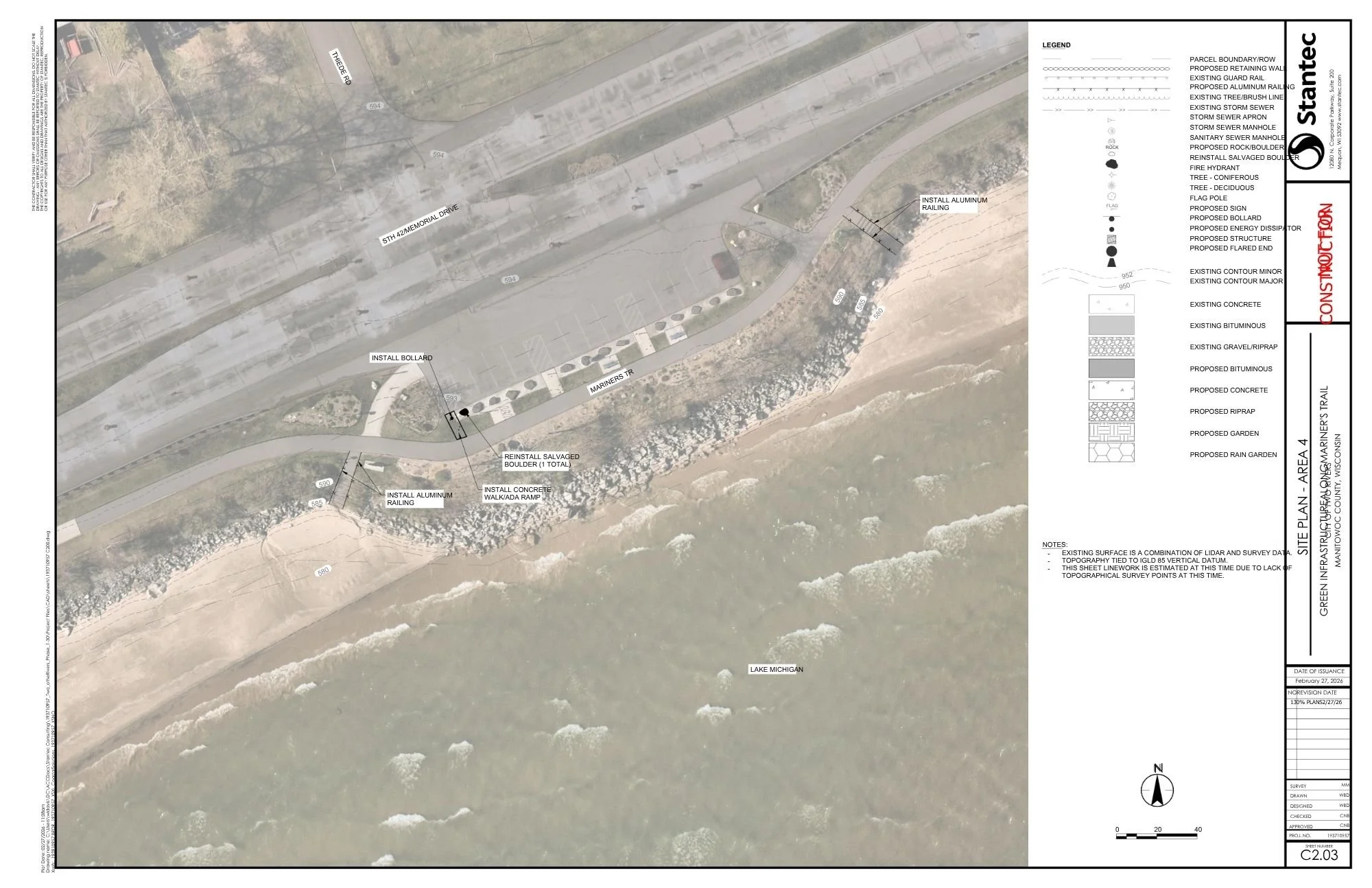
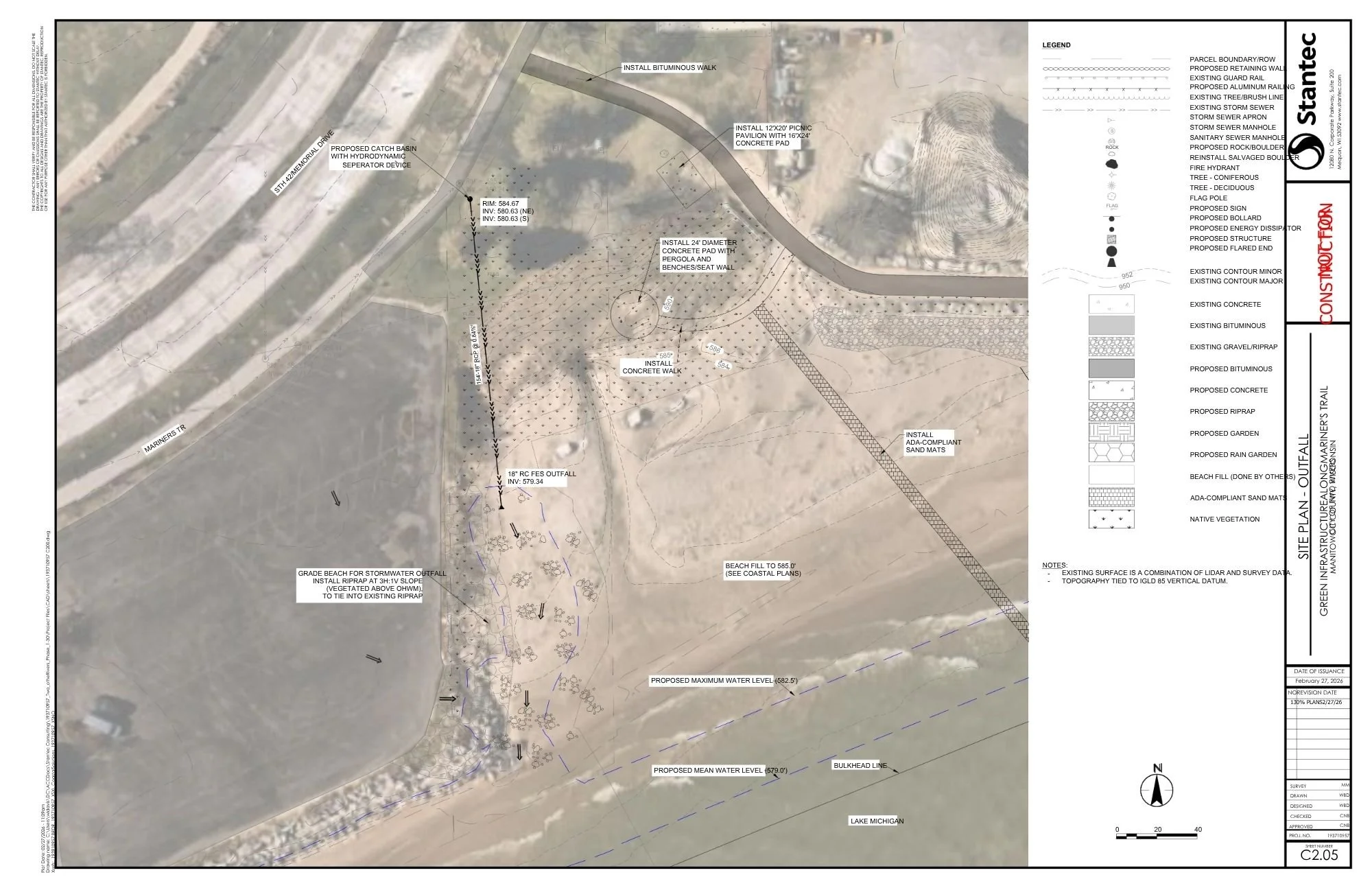
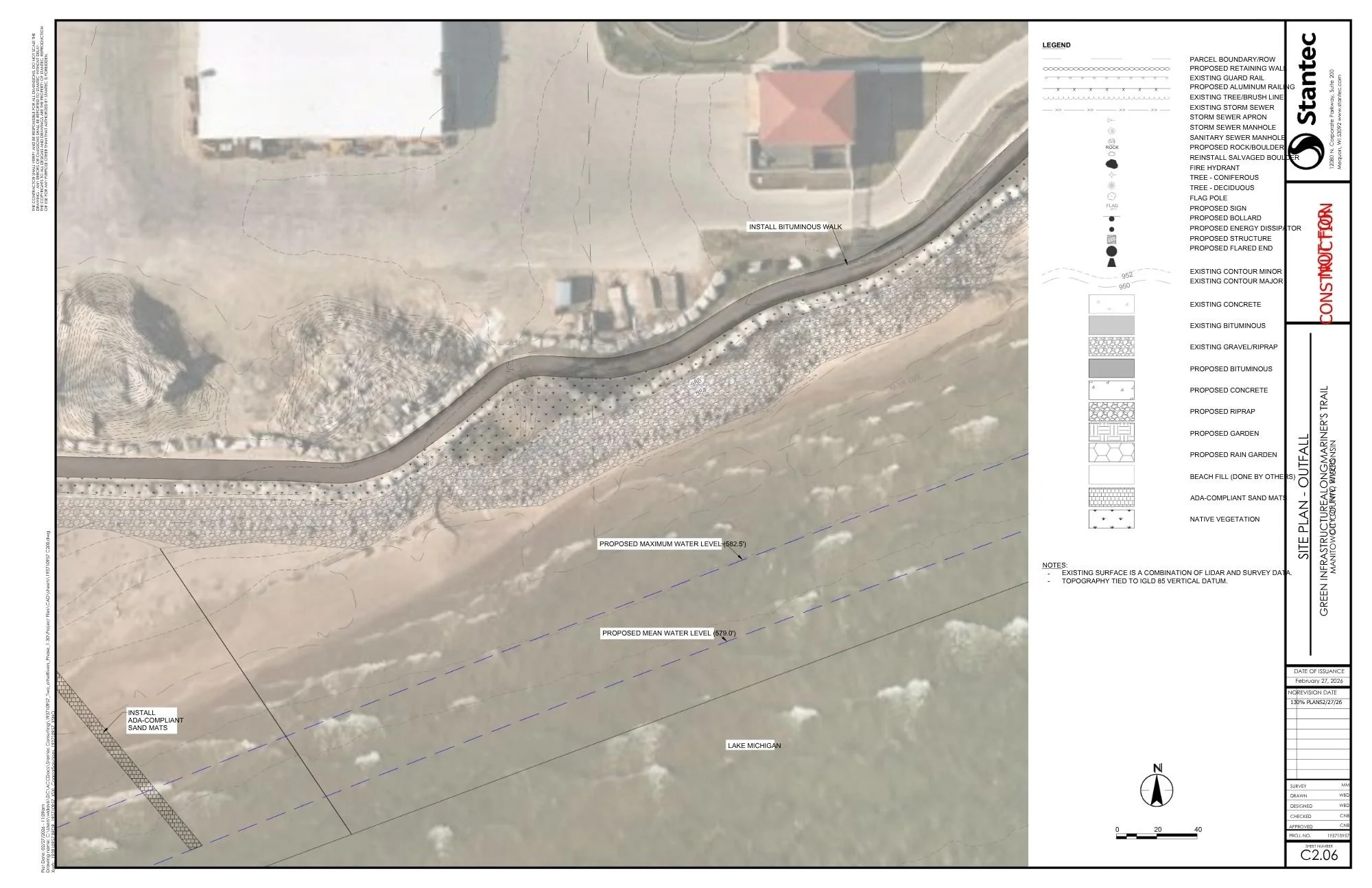
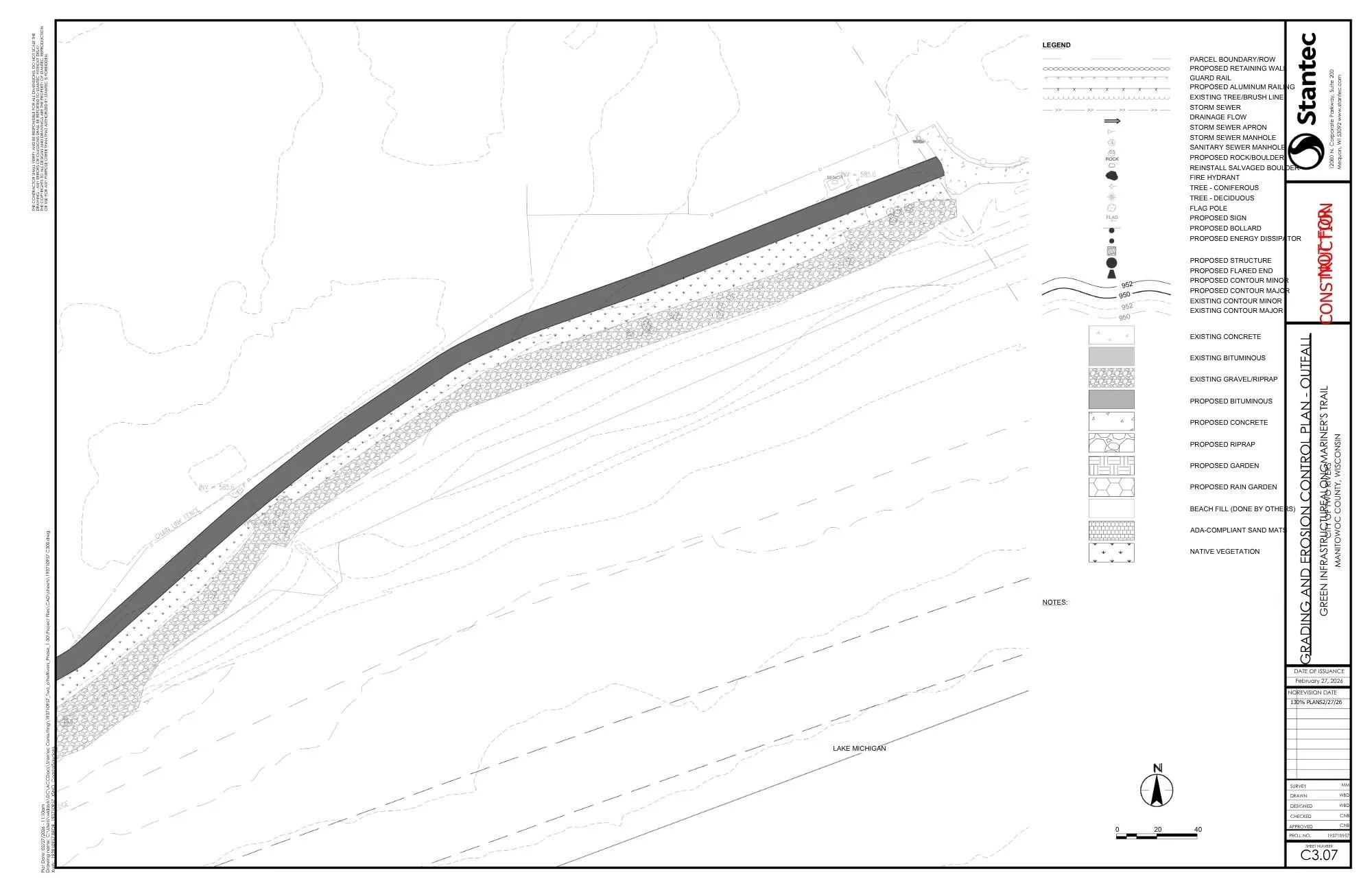
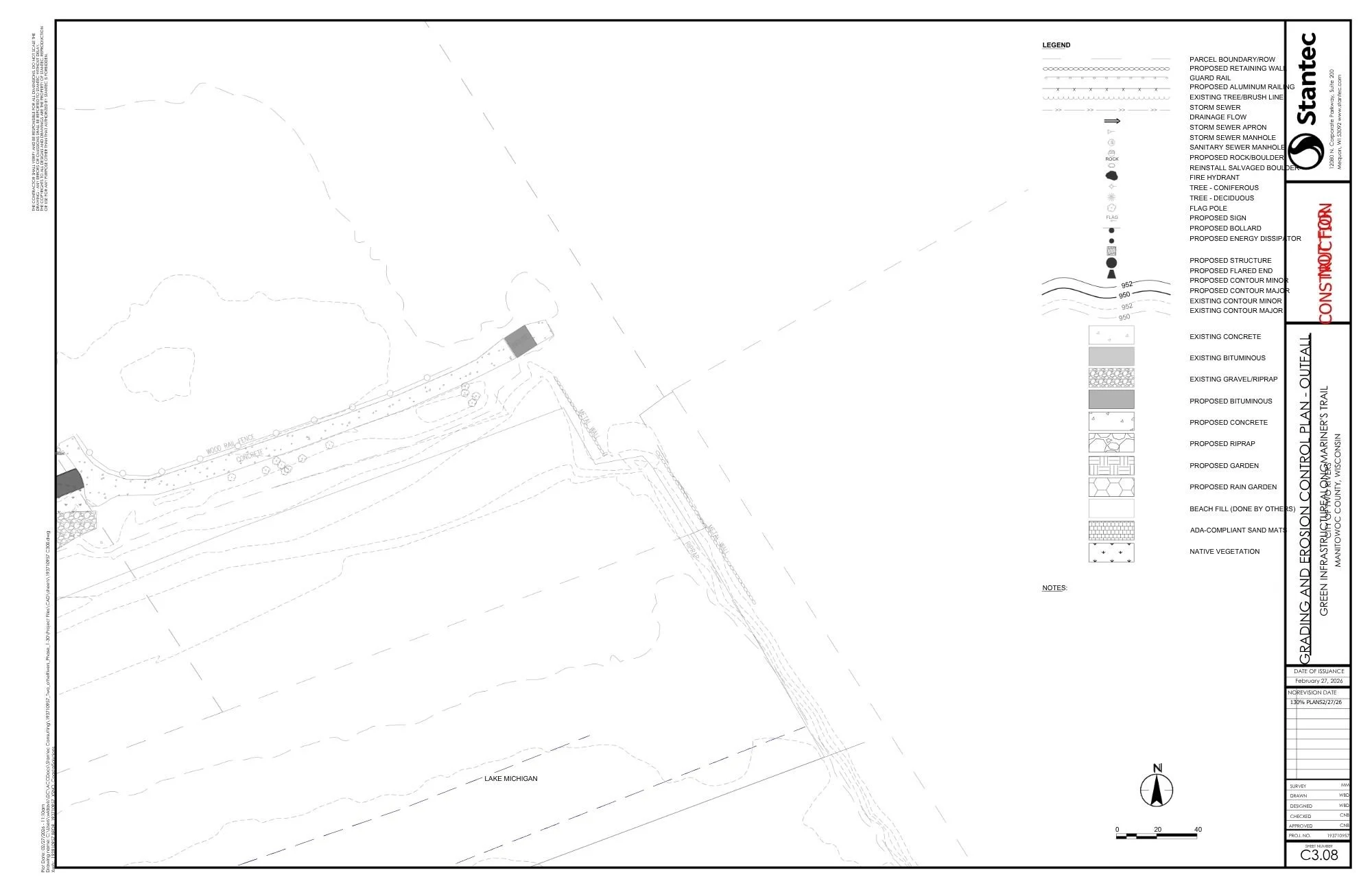
This project has two main components: shoreline stabilization and improvements along the Mariners Trail.
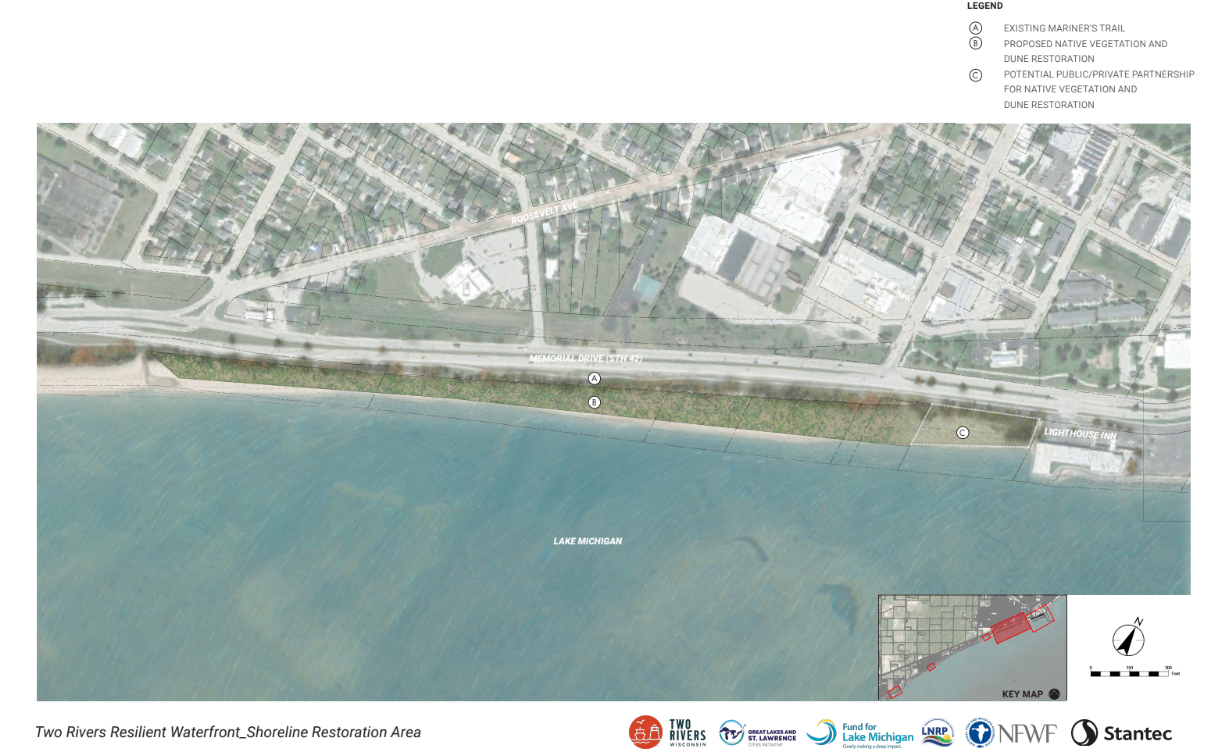
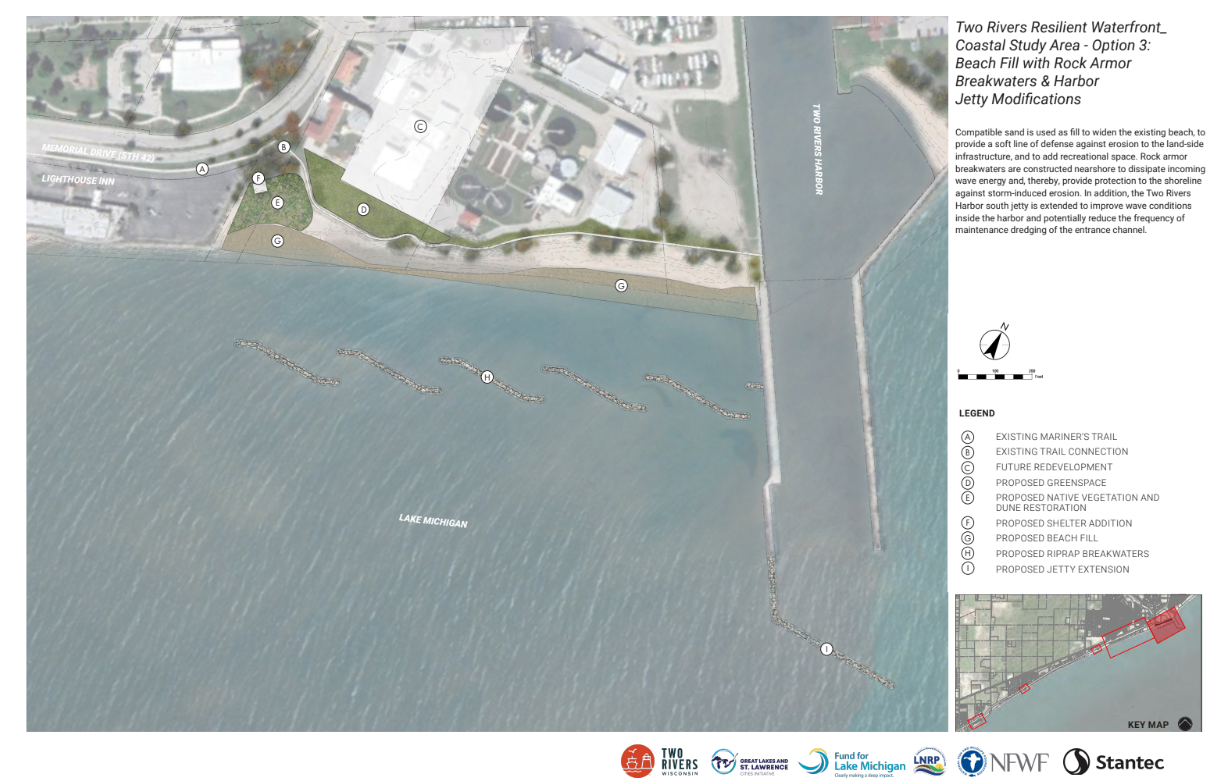
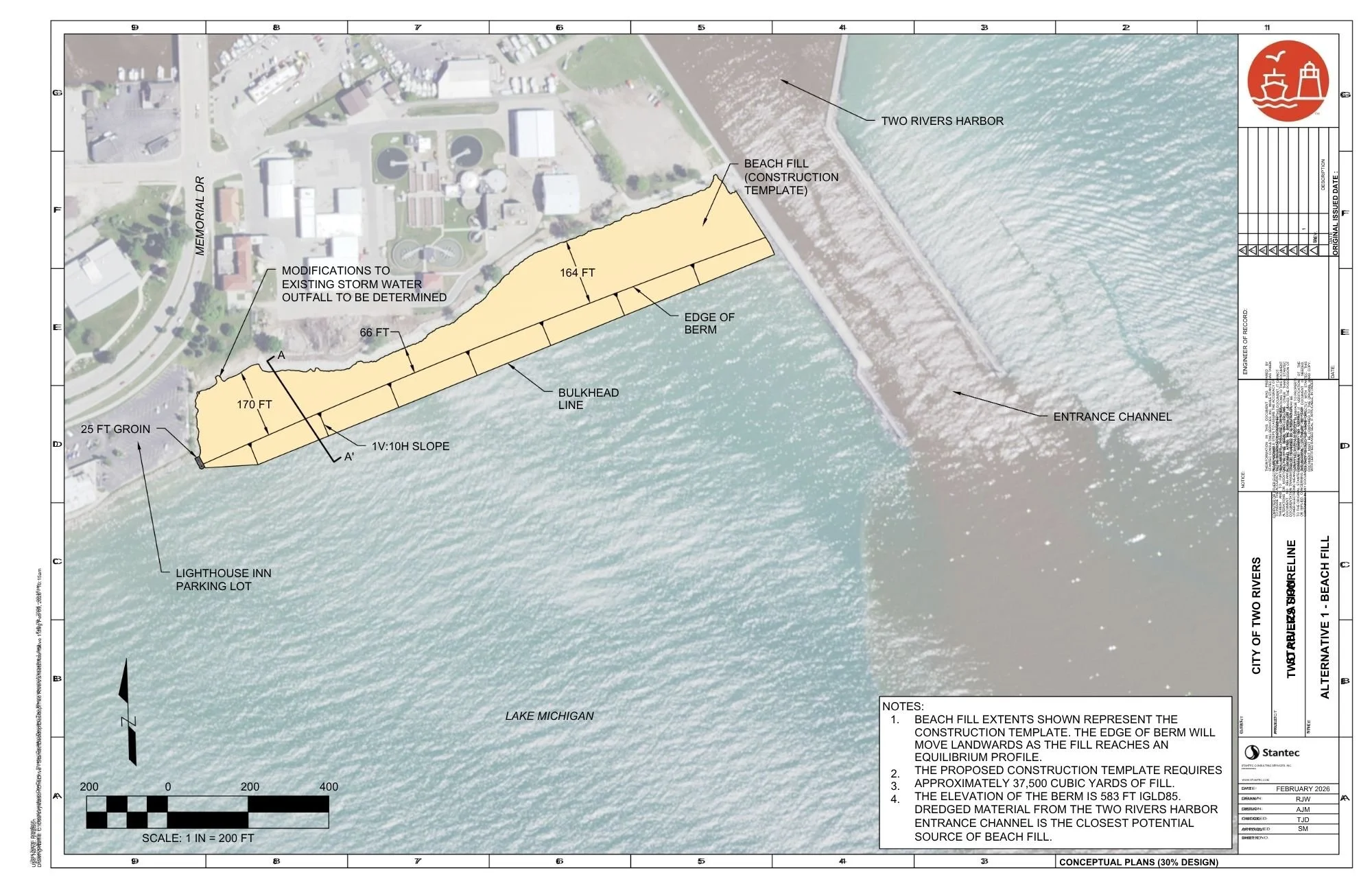
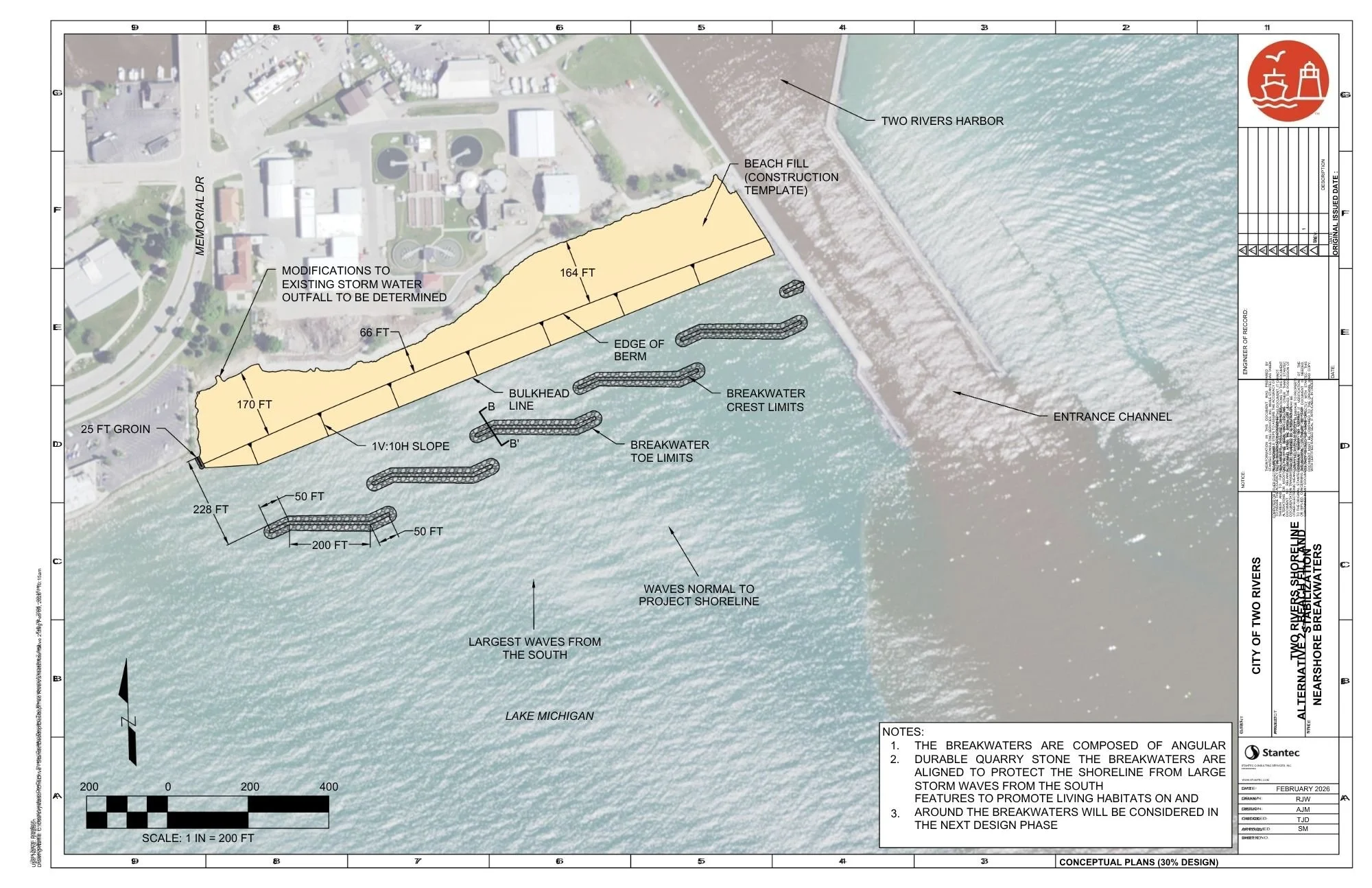
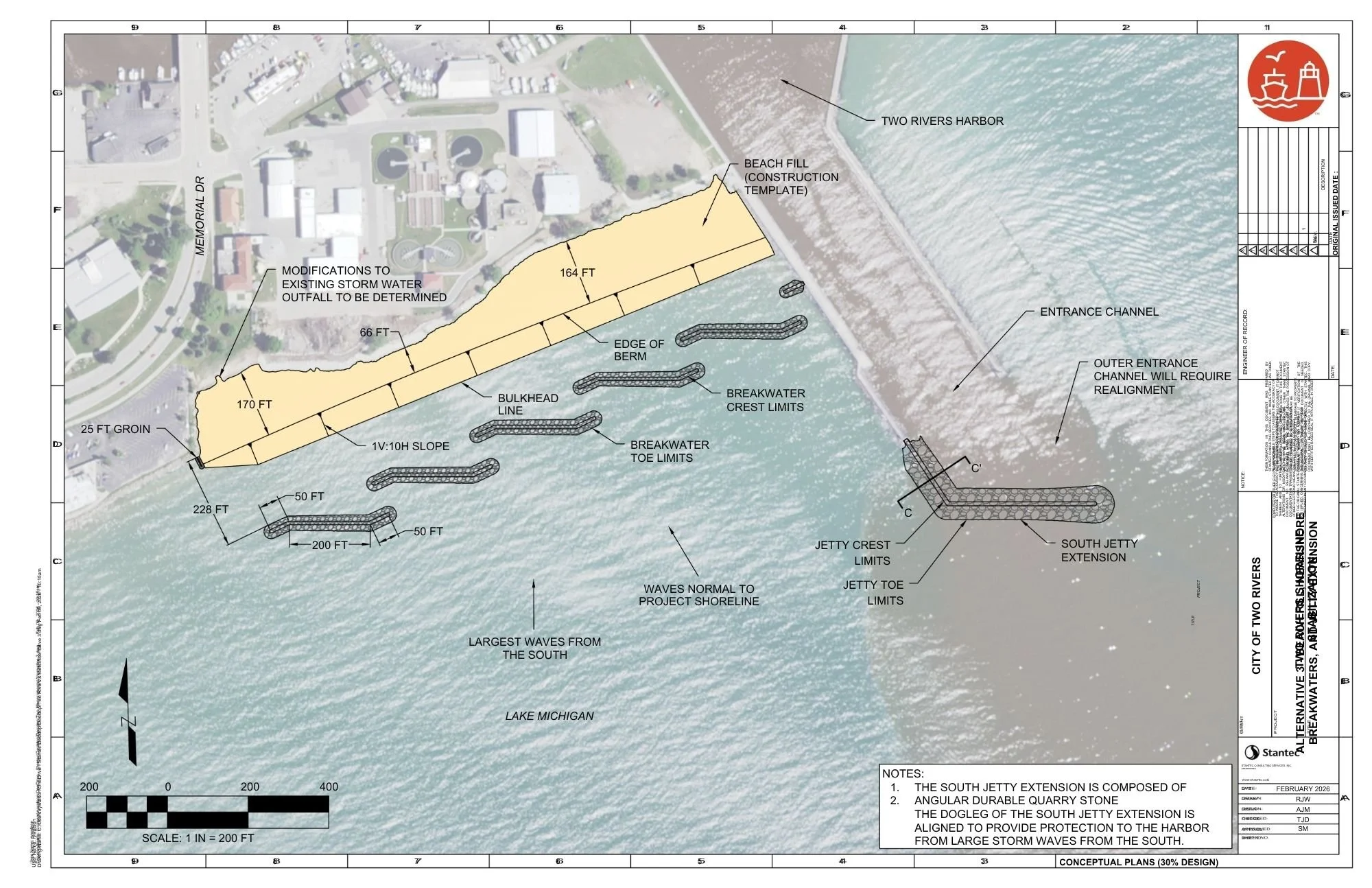
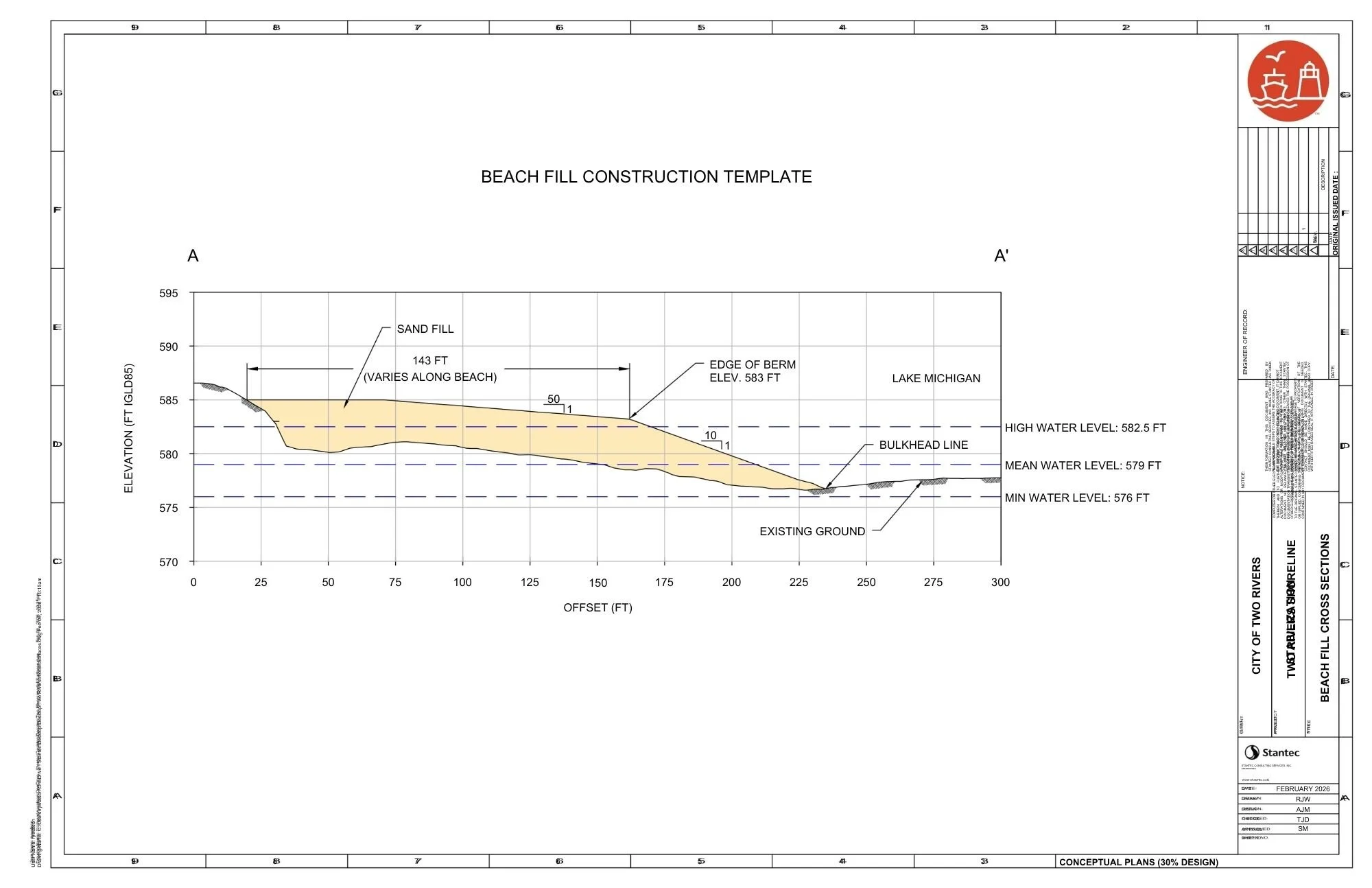
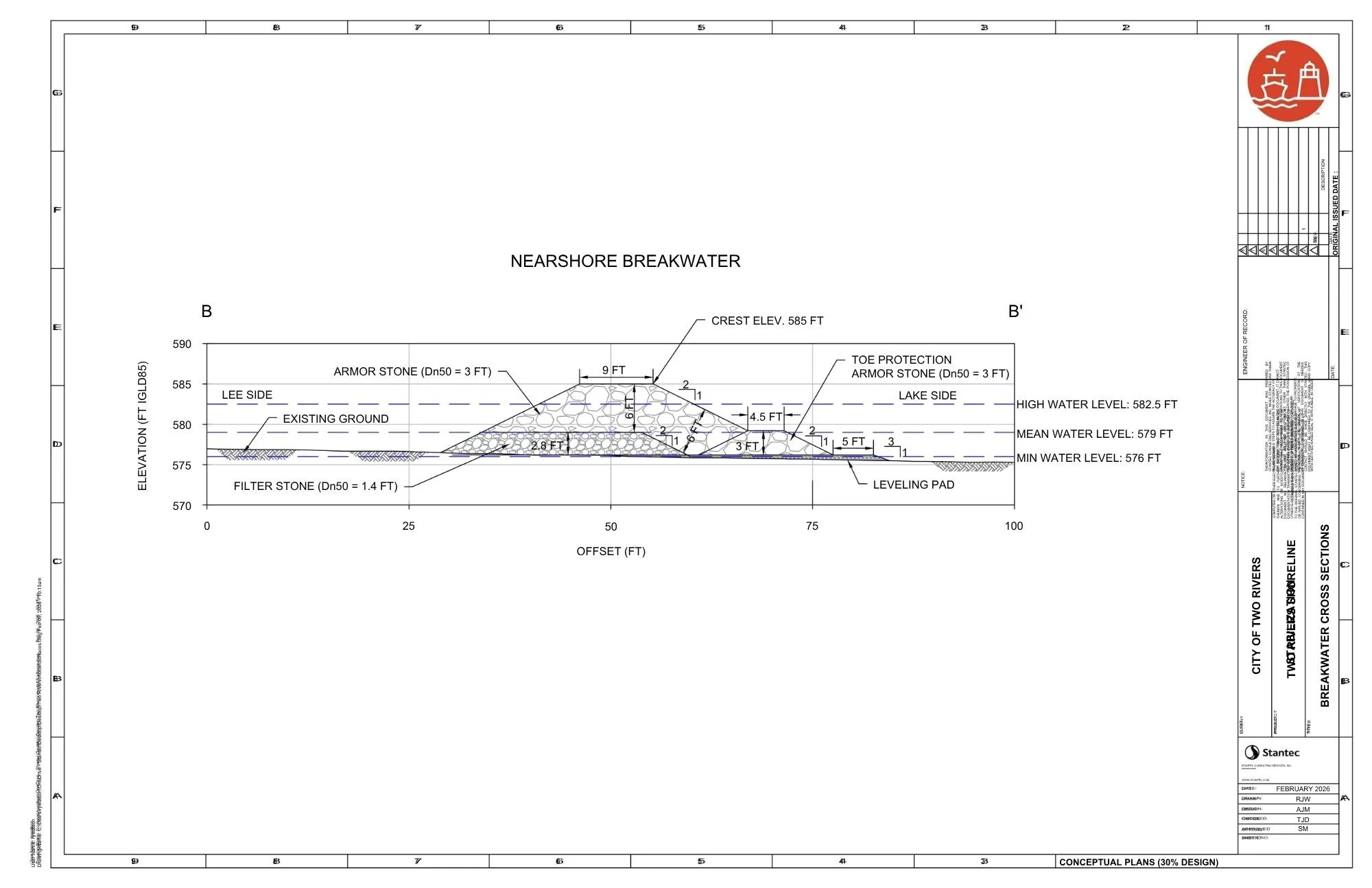
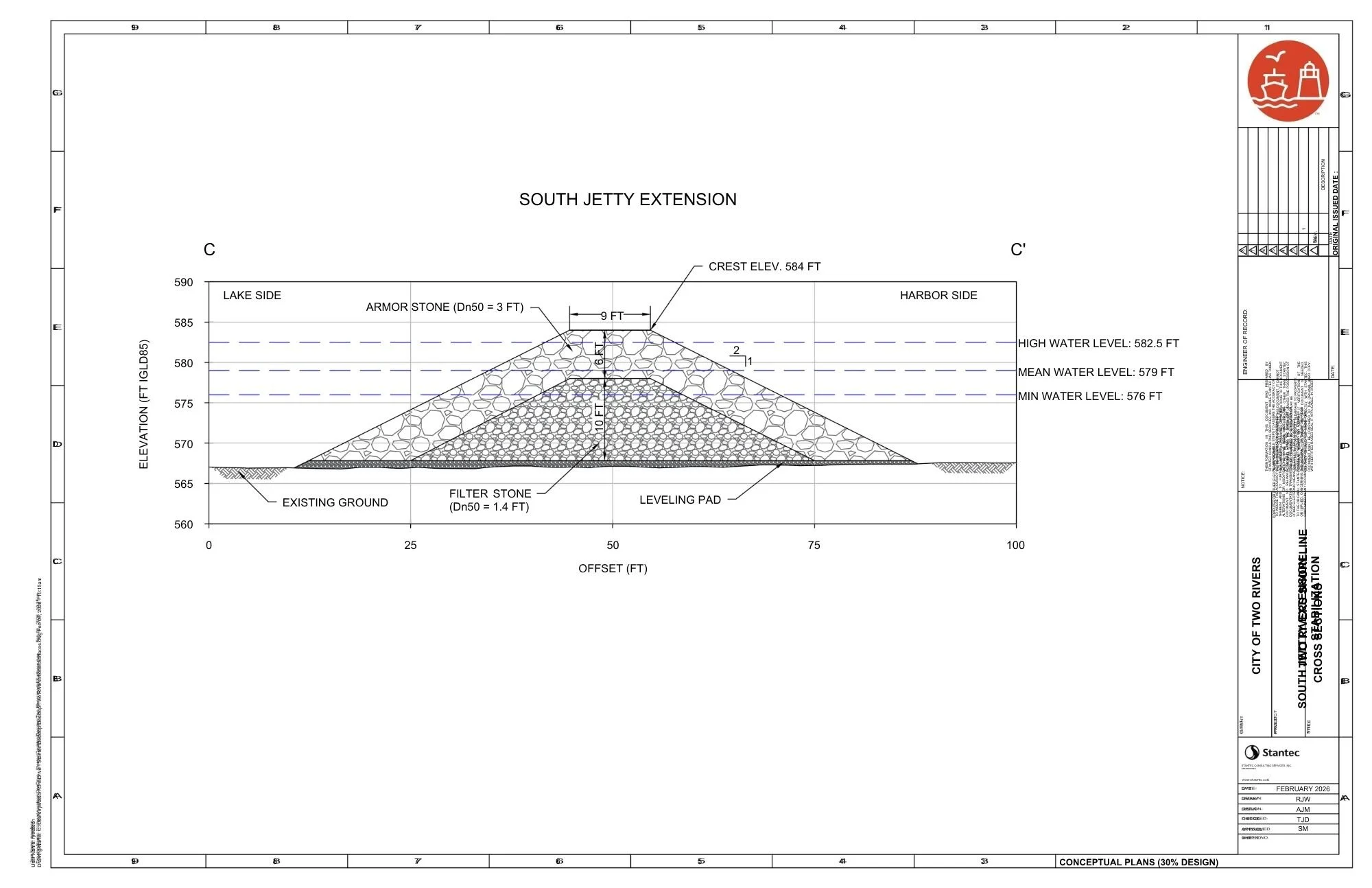
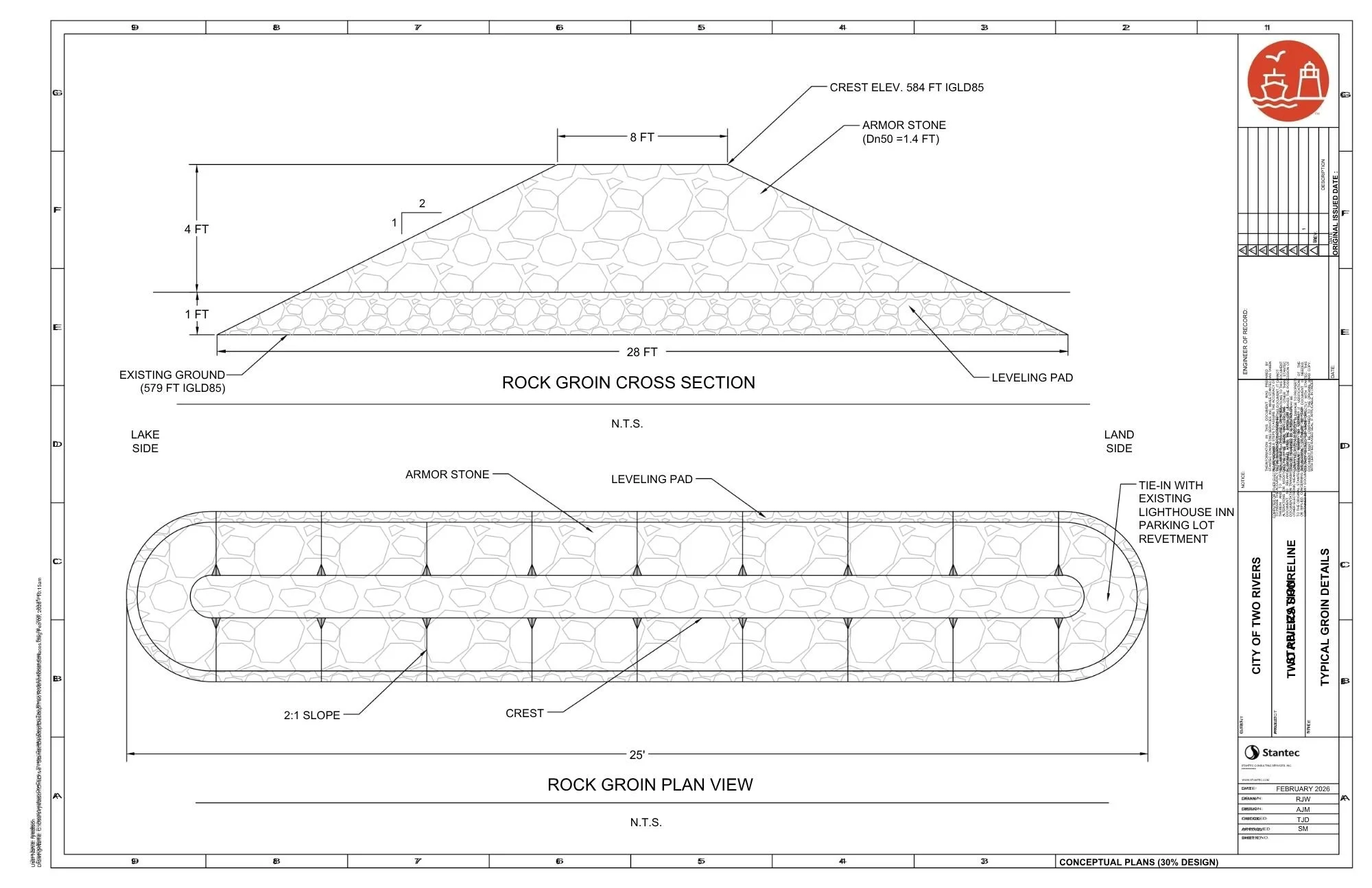
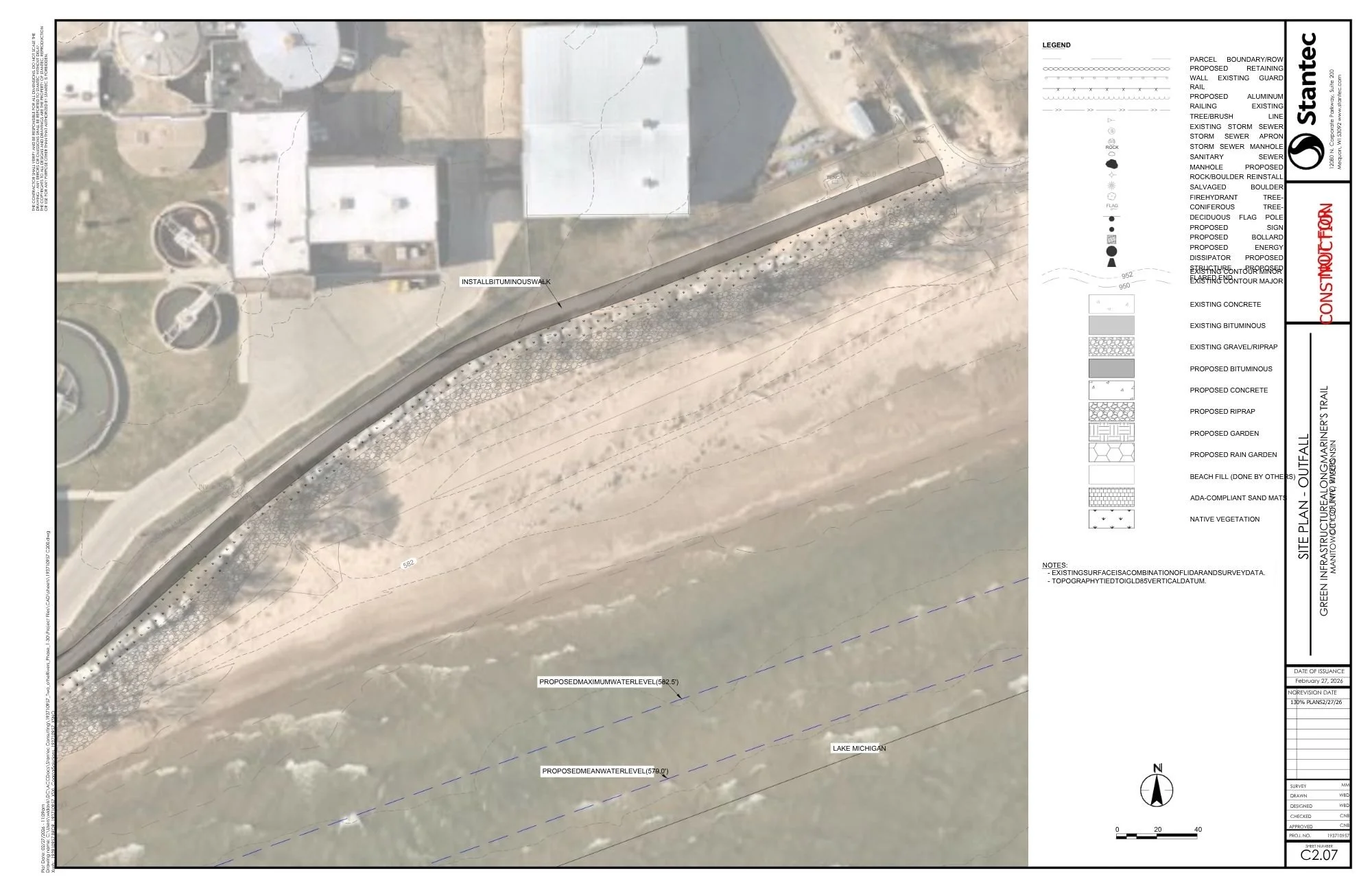
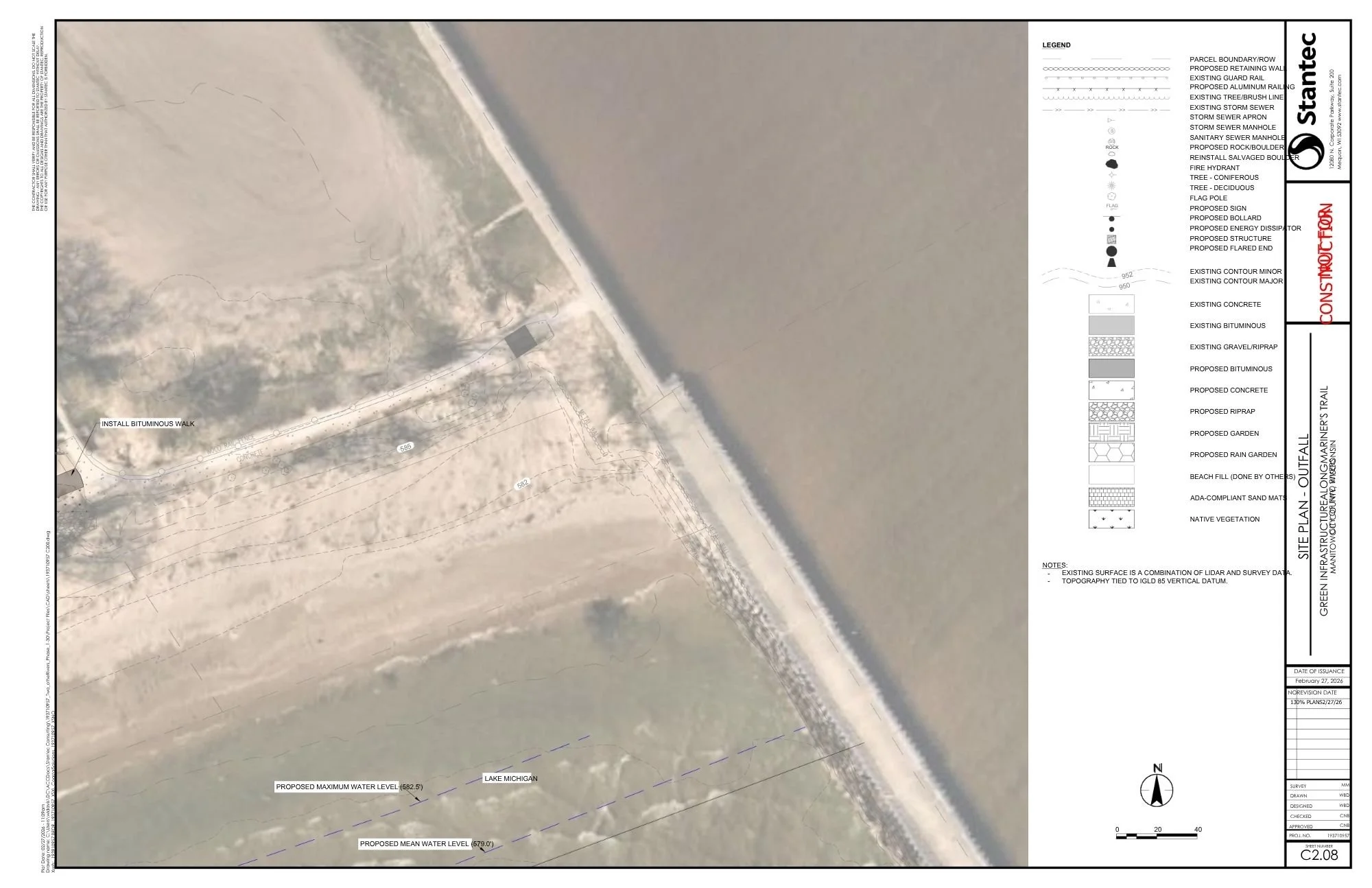
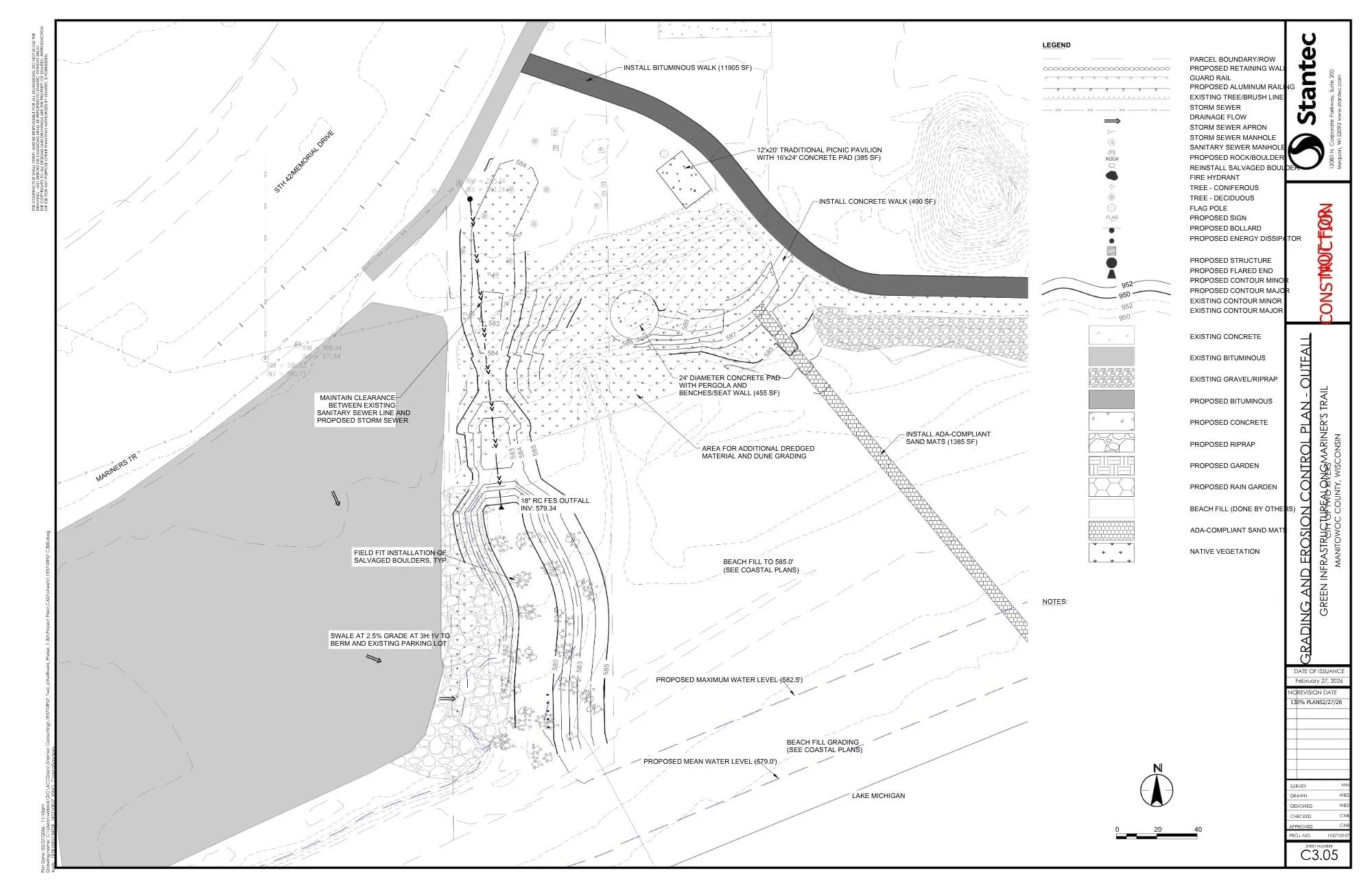
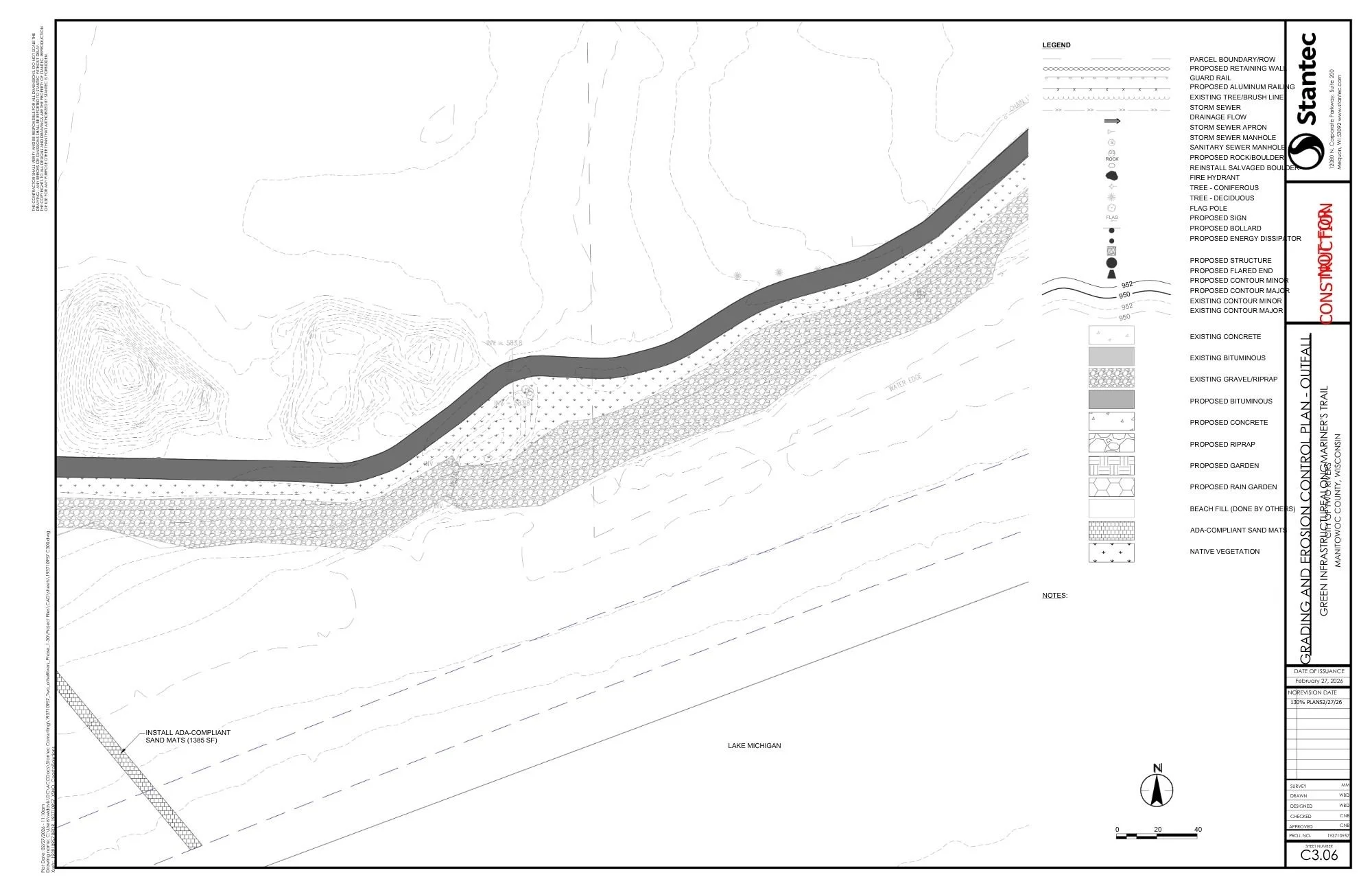
On the shoreline side, work is planned for the left side of the harbor near Seagull Marina and the Lighthouse Inn. With adequate funding, compatible sand will be added to widen the existing beach. This will create a softer, more natural line of defense against erosion, while also expanding recreational space for visitors. To further protect the shoreline, offshore rock breakwaters will be constructed to absorb wave energy before it reaches the coast. The south jetty of the Two Rivers Harbor will also be extended, which should improve wave conditions inside the harbor and potentially reduce how often dredging is needed at the entrance channel. In addition, the area west of the Lighthouse Inn will see dune restoration and native plantings, which will help stabilize the shoreline and reduce the ongoing issue of sand drifting across the trail and road.
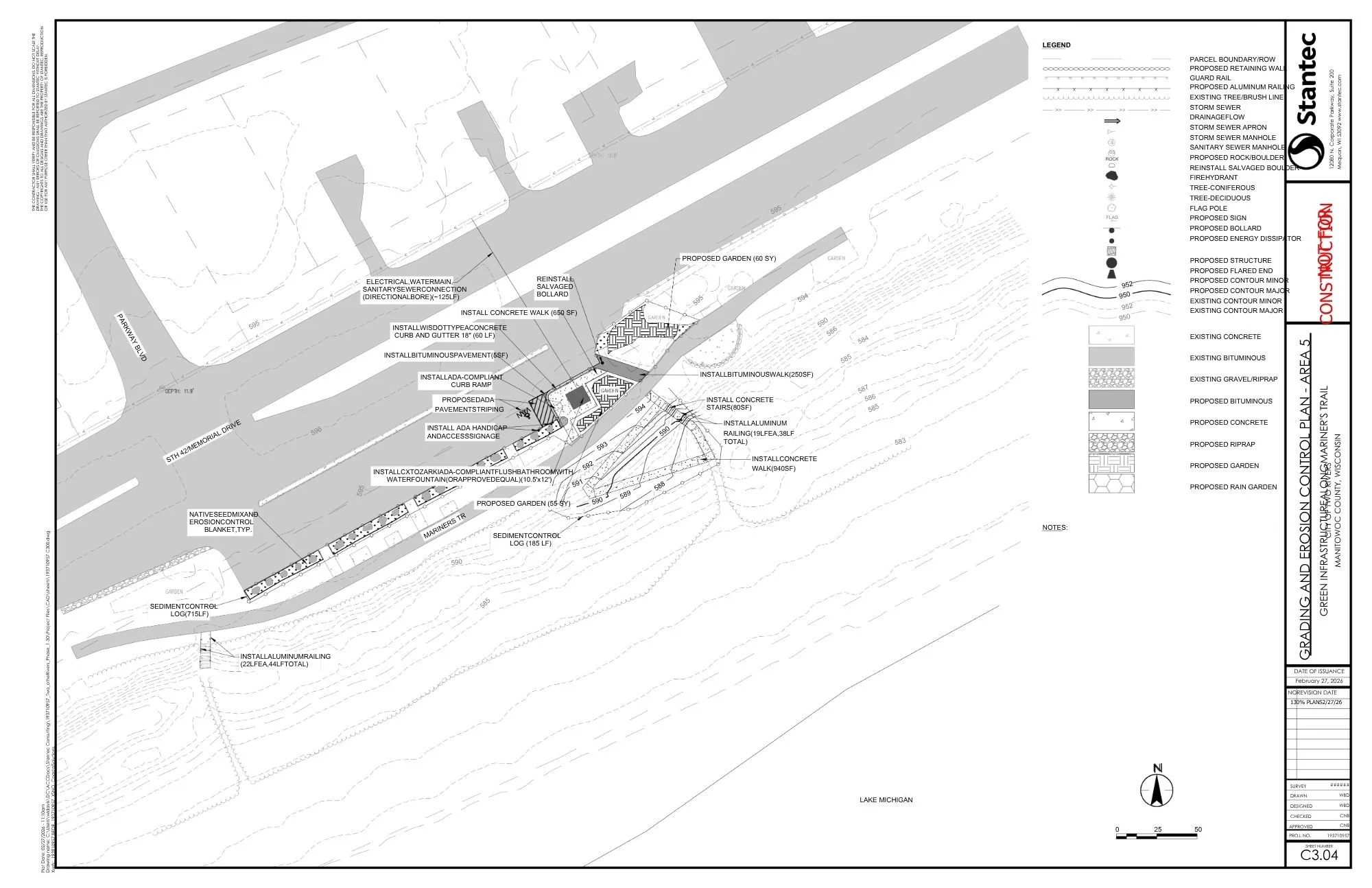
The Mariners Trail portion of the project introduces a series of improvements at different locations:
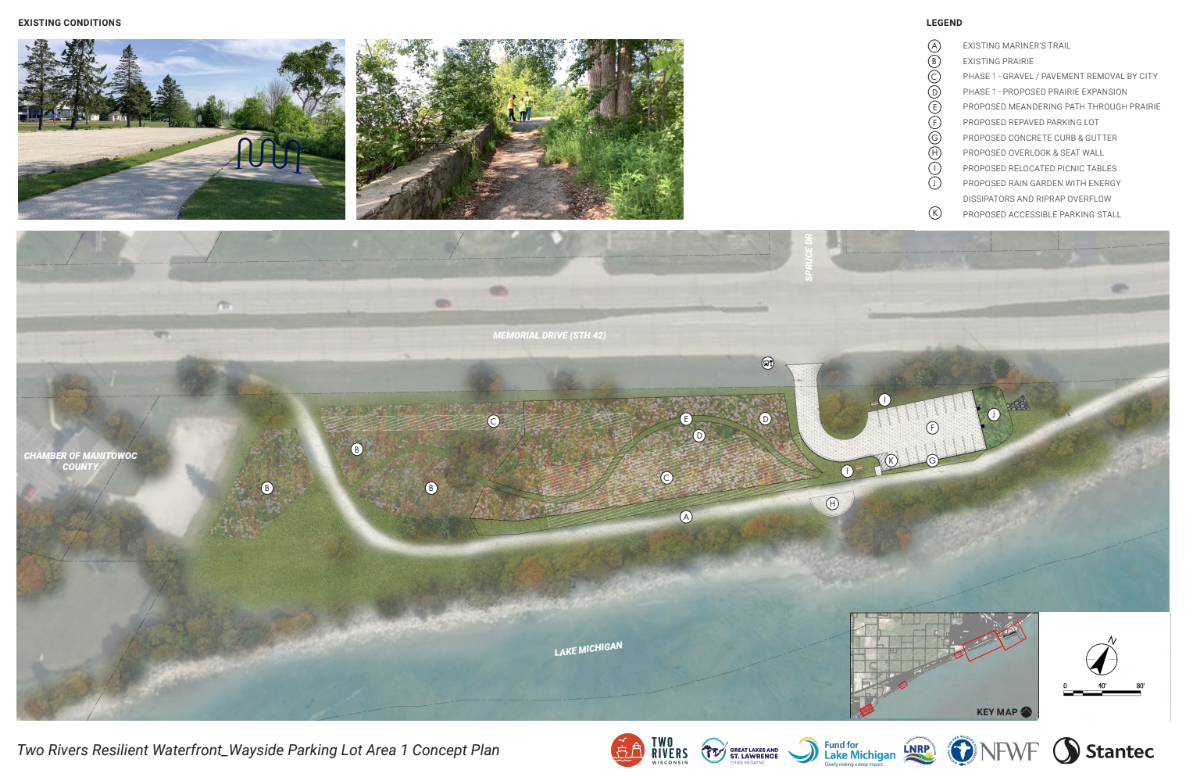
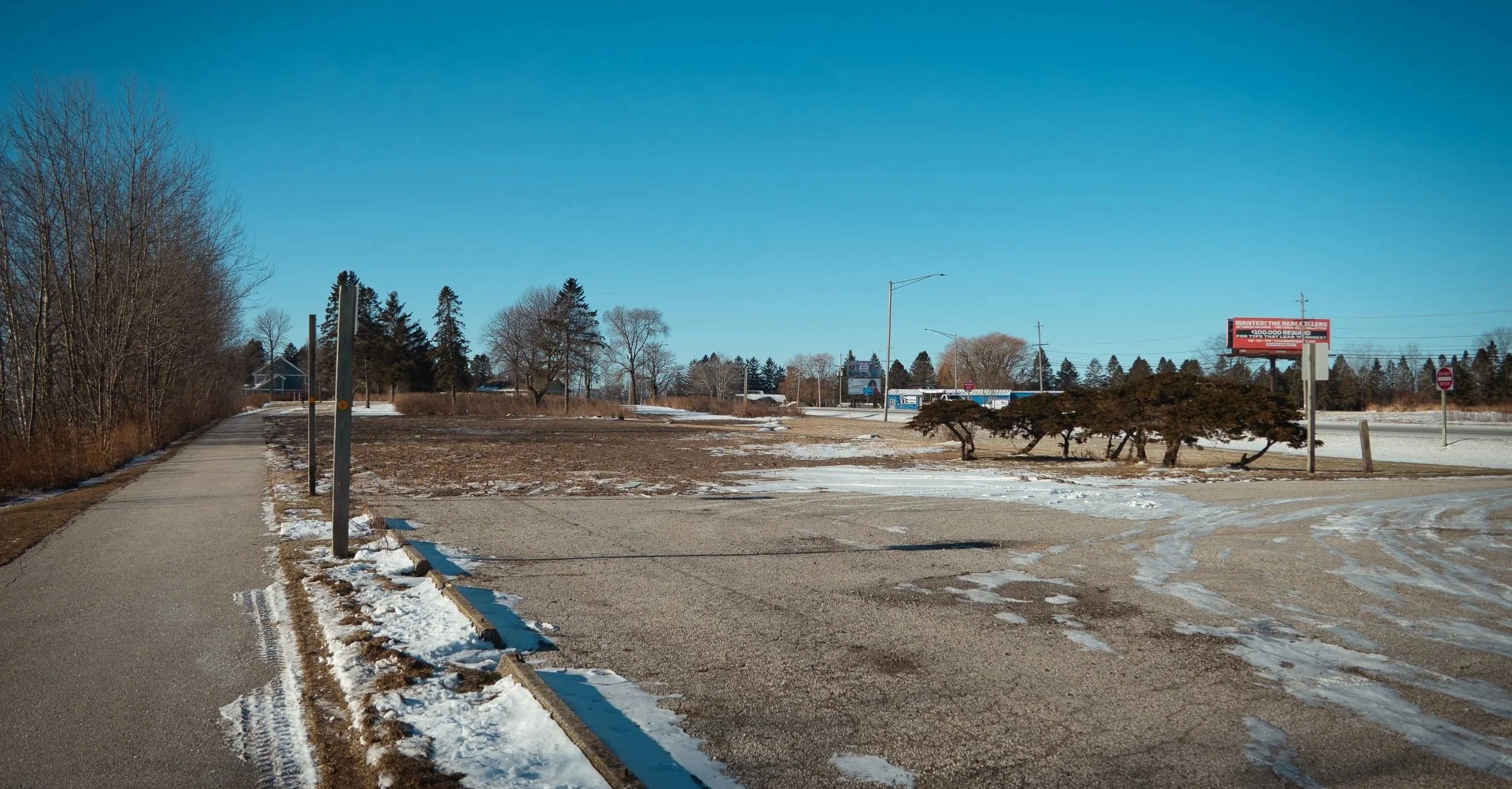
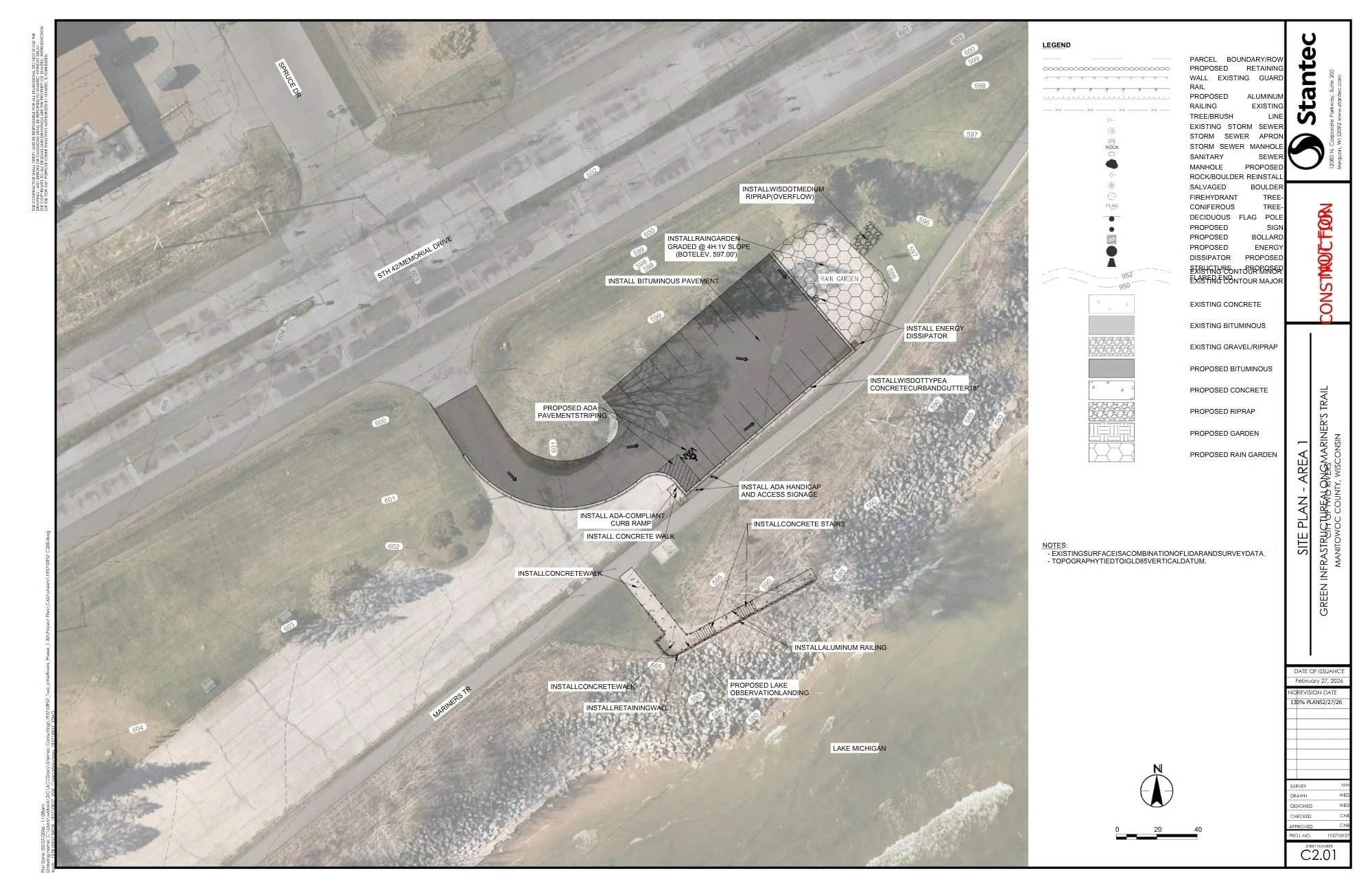
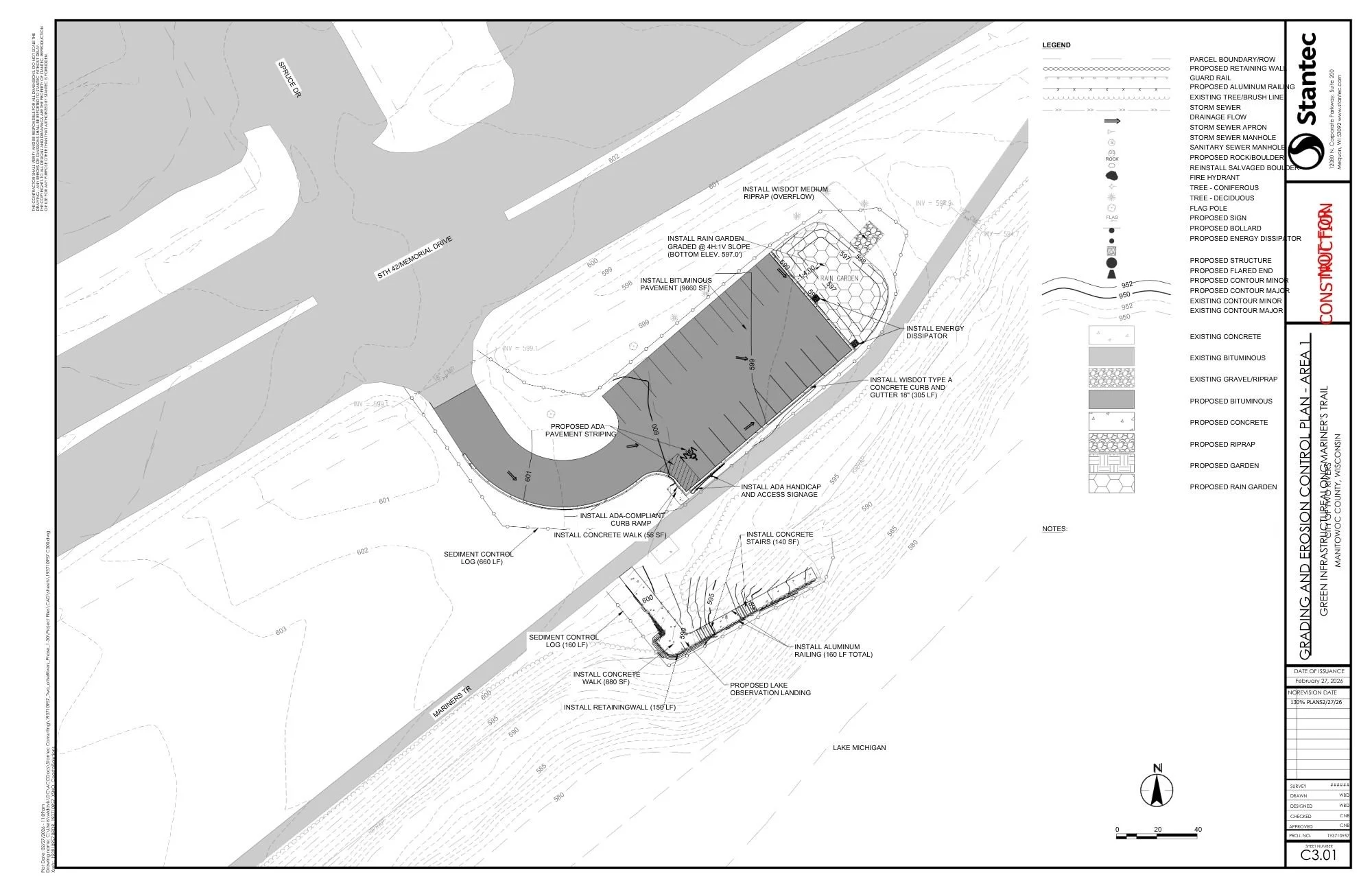
Area 1: Remove half of the pavement from the wayside parking lot and restore it as prairie, creating an extension of the existing natural habitat. A meandering walking path will invite people into the space, while the remaining parking area will be repaved and upgraded with a curb-and-gutter system for improved stormwater management. A rain garden with energy dissipators and riprap overflow is also proposed to strengthen stormwater resilience.
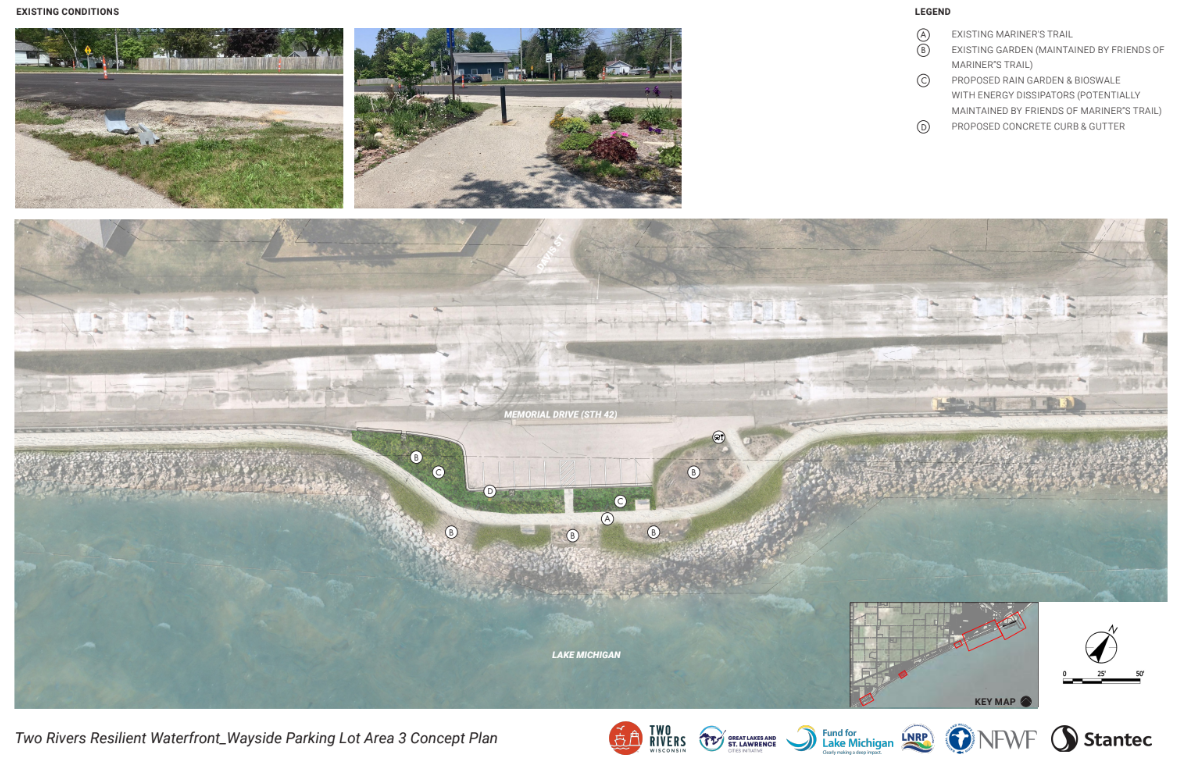
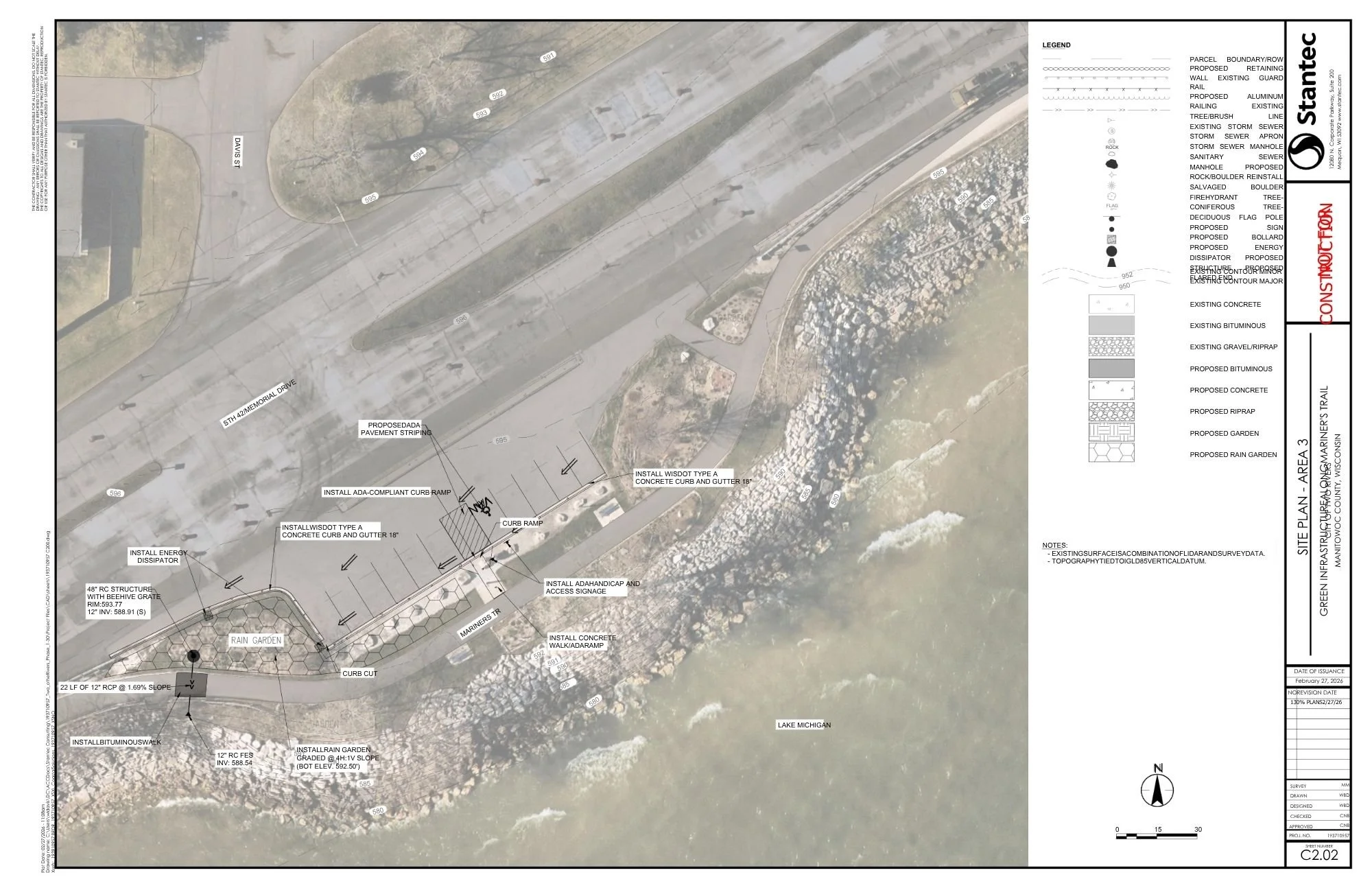
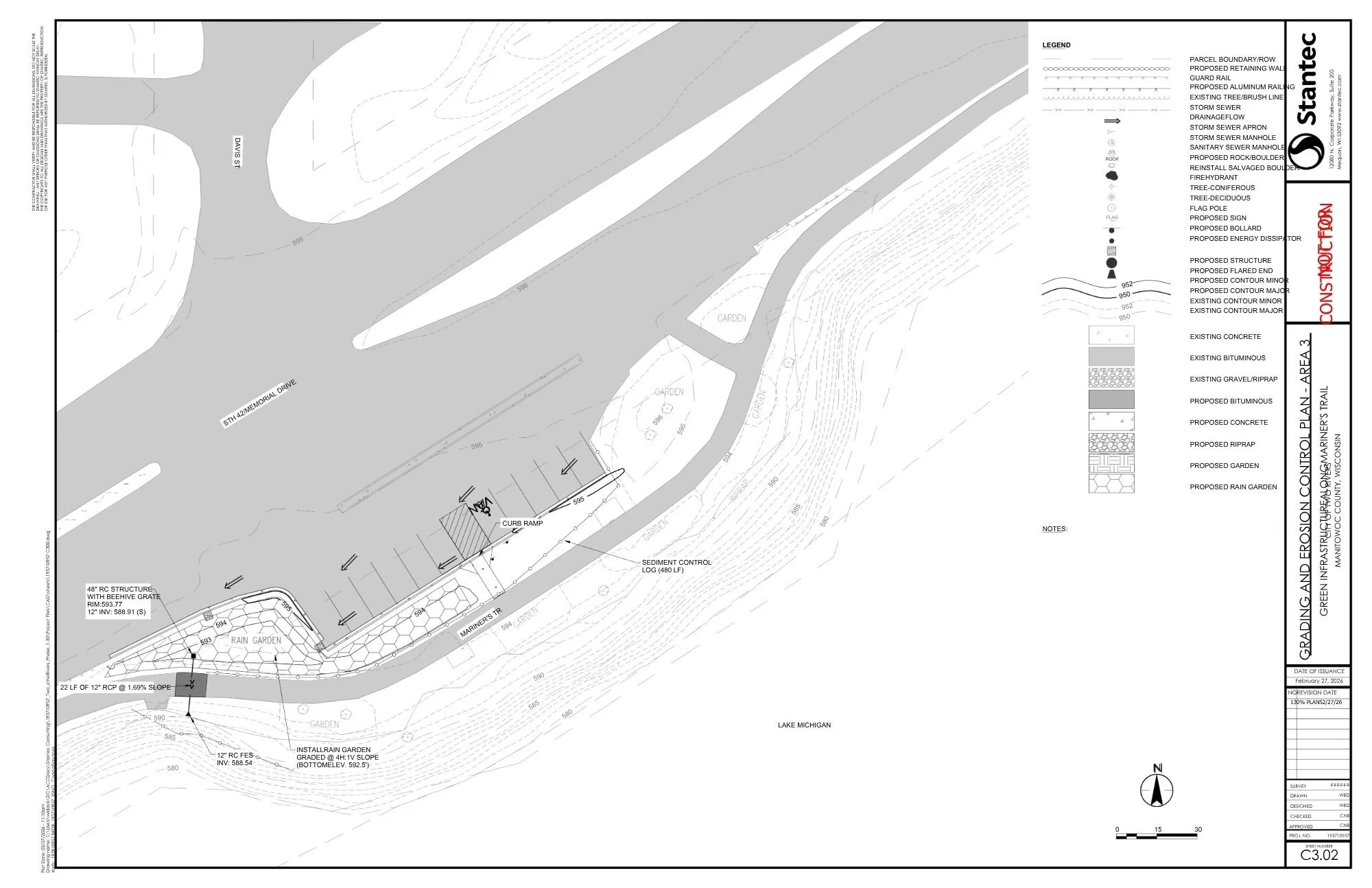
Area 3: Reimagine some of the existing ornamental gardens maintained by the Friends of the Mariners Trail. The proposal is to convert part of these gardens into a rain garden and bioswale, which would provide ecological benefits while still being maintained by the Friends group. This shift aligns the gardens with broader stormwater and resiliency goals.
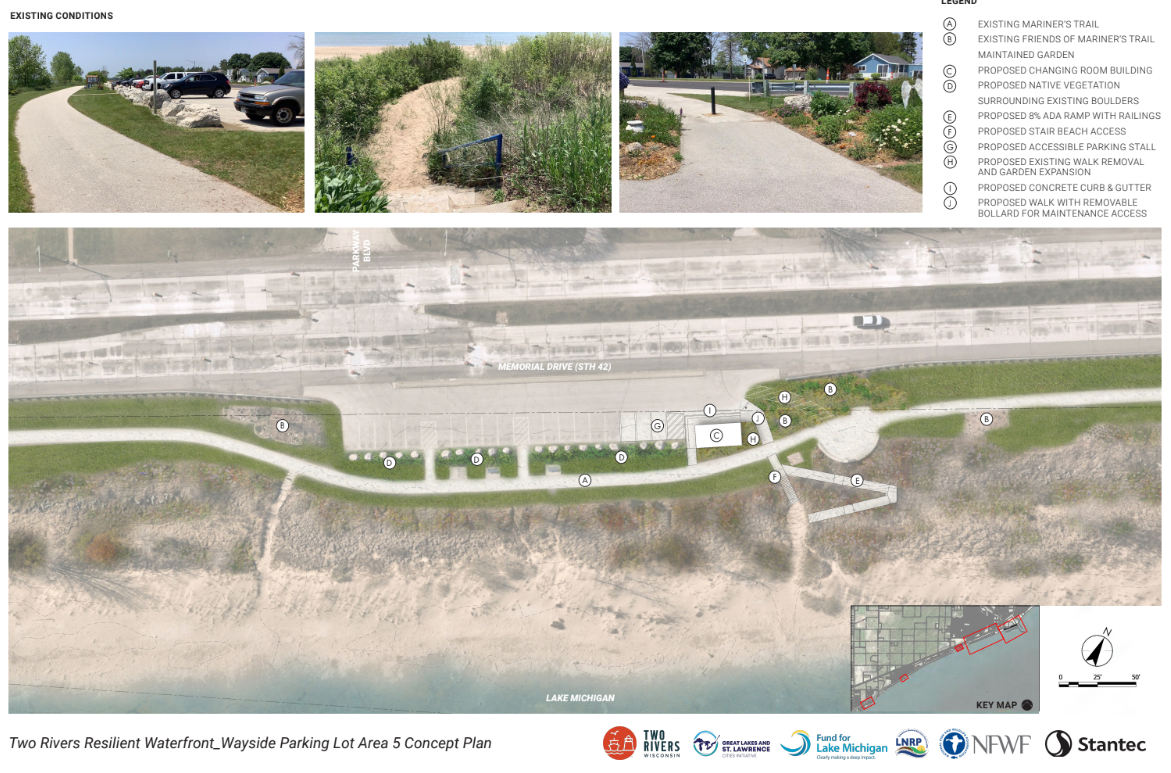
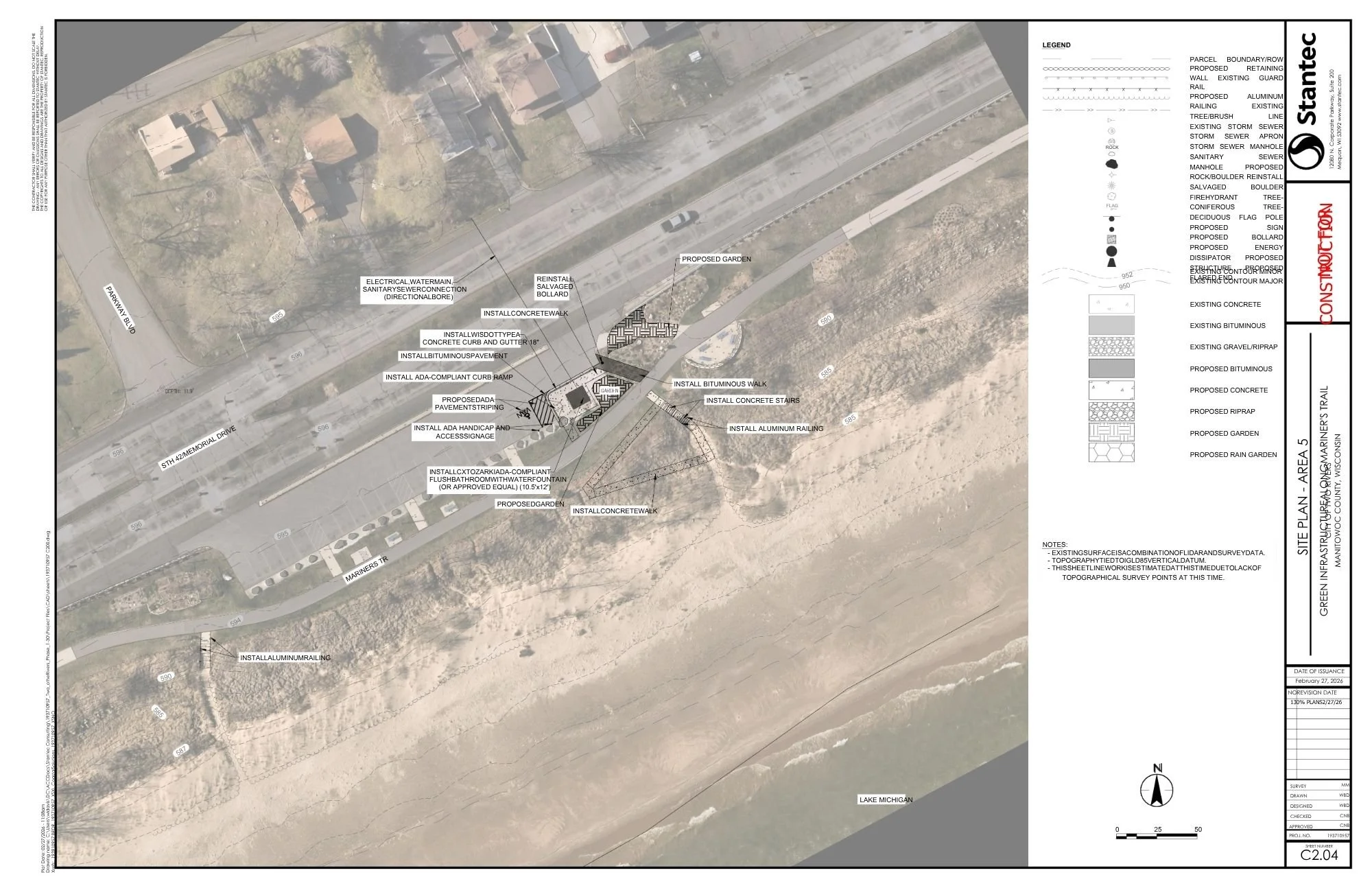
Area 5: Enhance accessibility and habitat along the lakeshore. Native vegetation would be planted around the existing boulders that act as vehicle barriers, improving both aesthetics and ecological value. Plans also include an ADA-compliant ramp with railings for accessible beach entry, a new stairway down to the beach, and, if funding allows, a small changing room and restroom facility for visitors.
Current Work
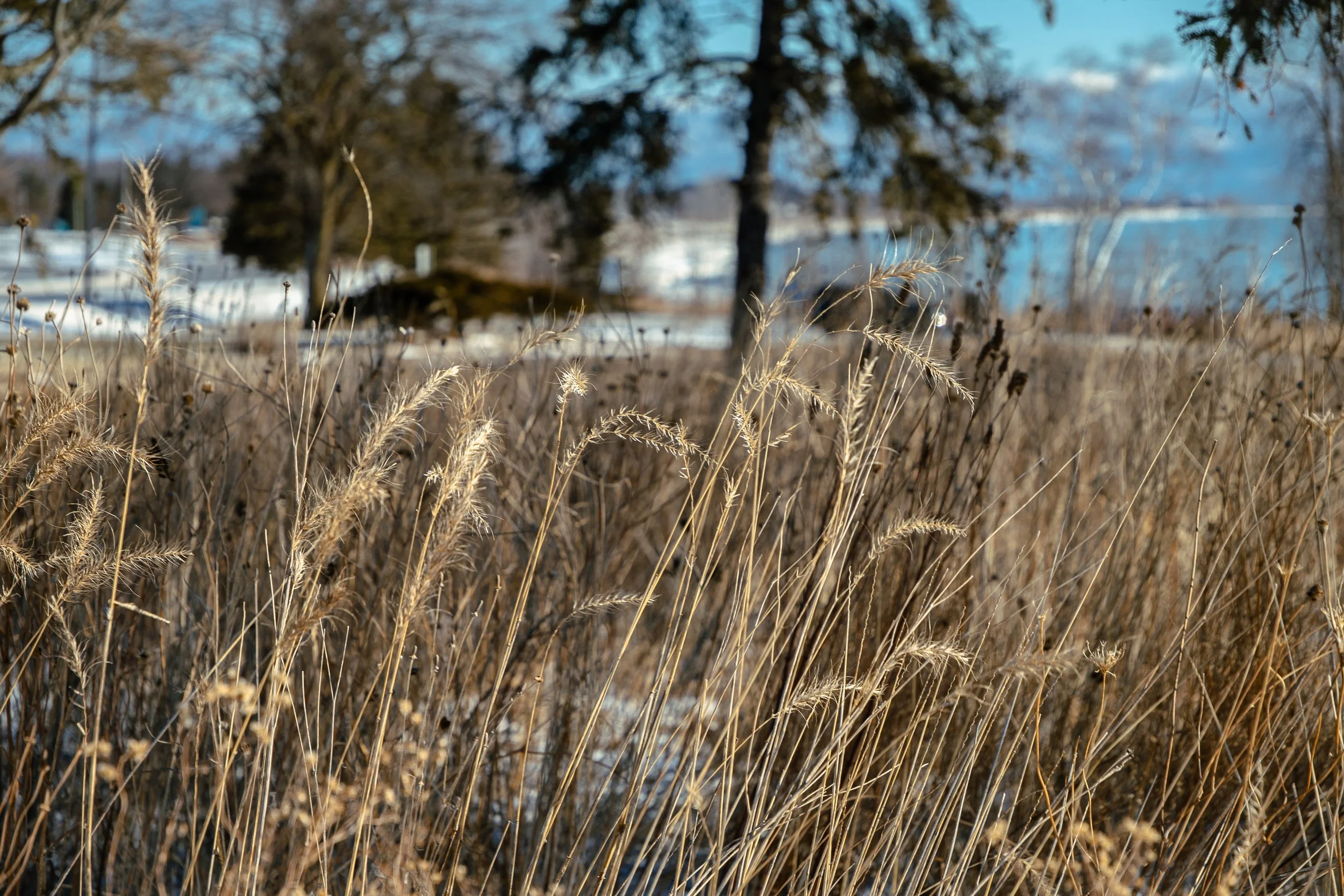
Why expand prairie habitat?
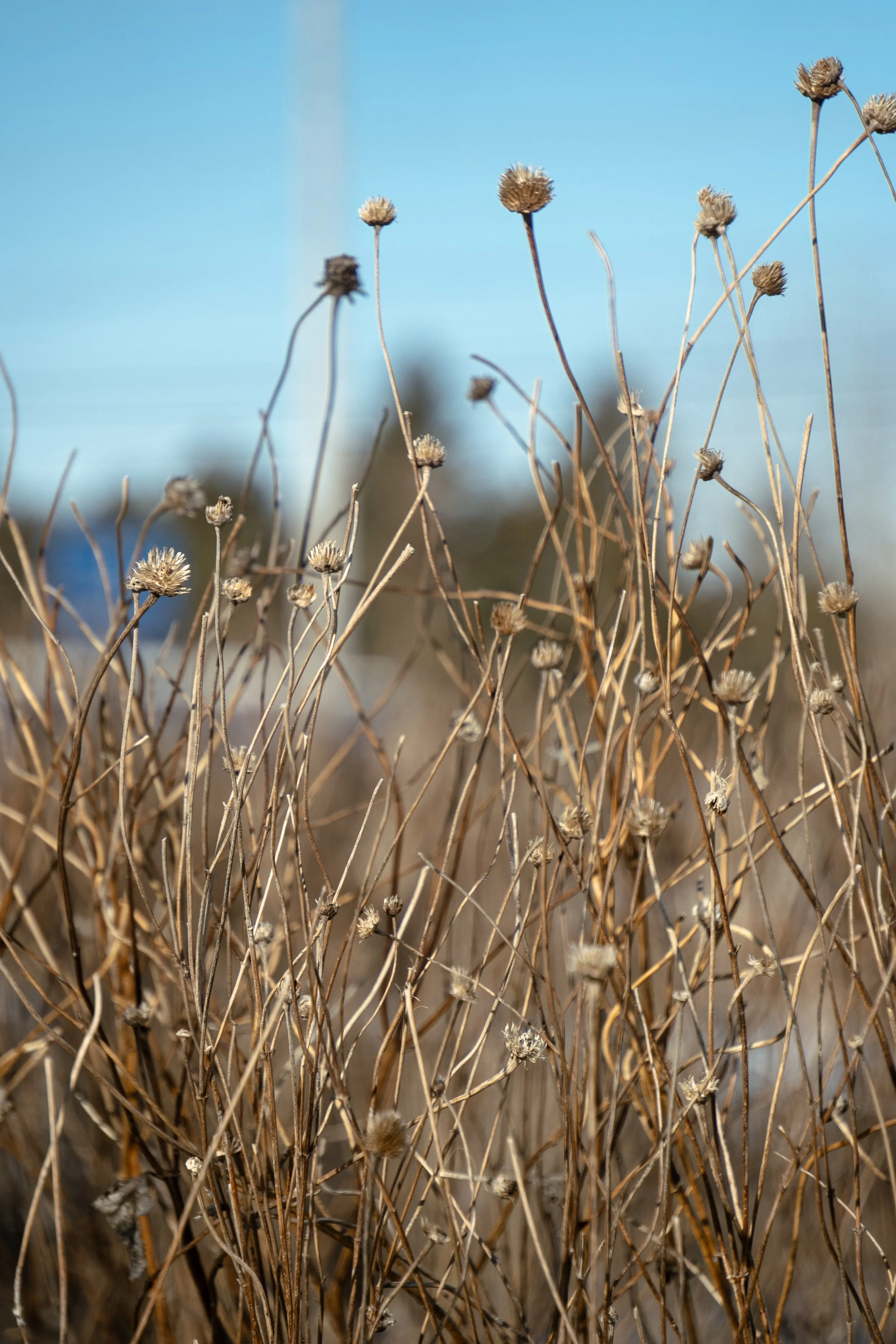
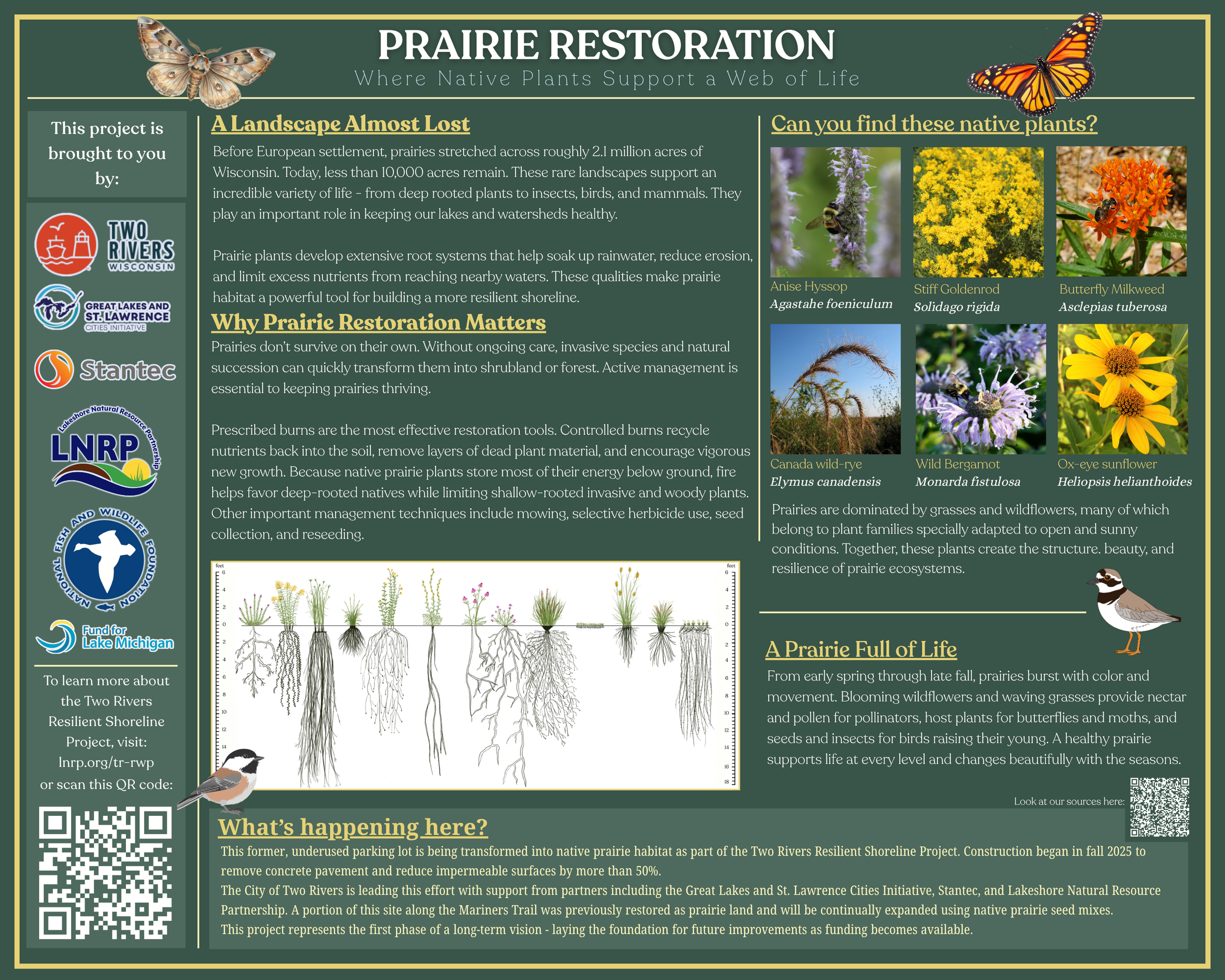
Prior to European colonization, prairies covered 2.1 million acres across Wisconsin. Today, according to the WDNR, less than 0.1% of native prairie remains in the state. Besides the value of the native landscape, prairies are home to a biodiverse array of life, hosting plants, insects, vertebrates, and other organisms like mosses, liverworts, and lichens, along with organisms invisible to the eye.
Prairies also benefit lakes and watersheds. Their root systems and soil structures allow them to absorb rainfall and water flowing across the landscape, providing erosion control and nutrient reduction.
These factors make prairie habitat a great and accessible candidate for our Resilient Waterfront Project!
(https://www.cleanlakesalliance.org/prairies-and-our-lakes/)
Area 1 - Wayside next to the Manitowoc Chamber (on City of Two Rivers Property)
| Mariners Trail
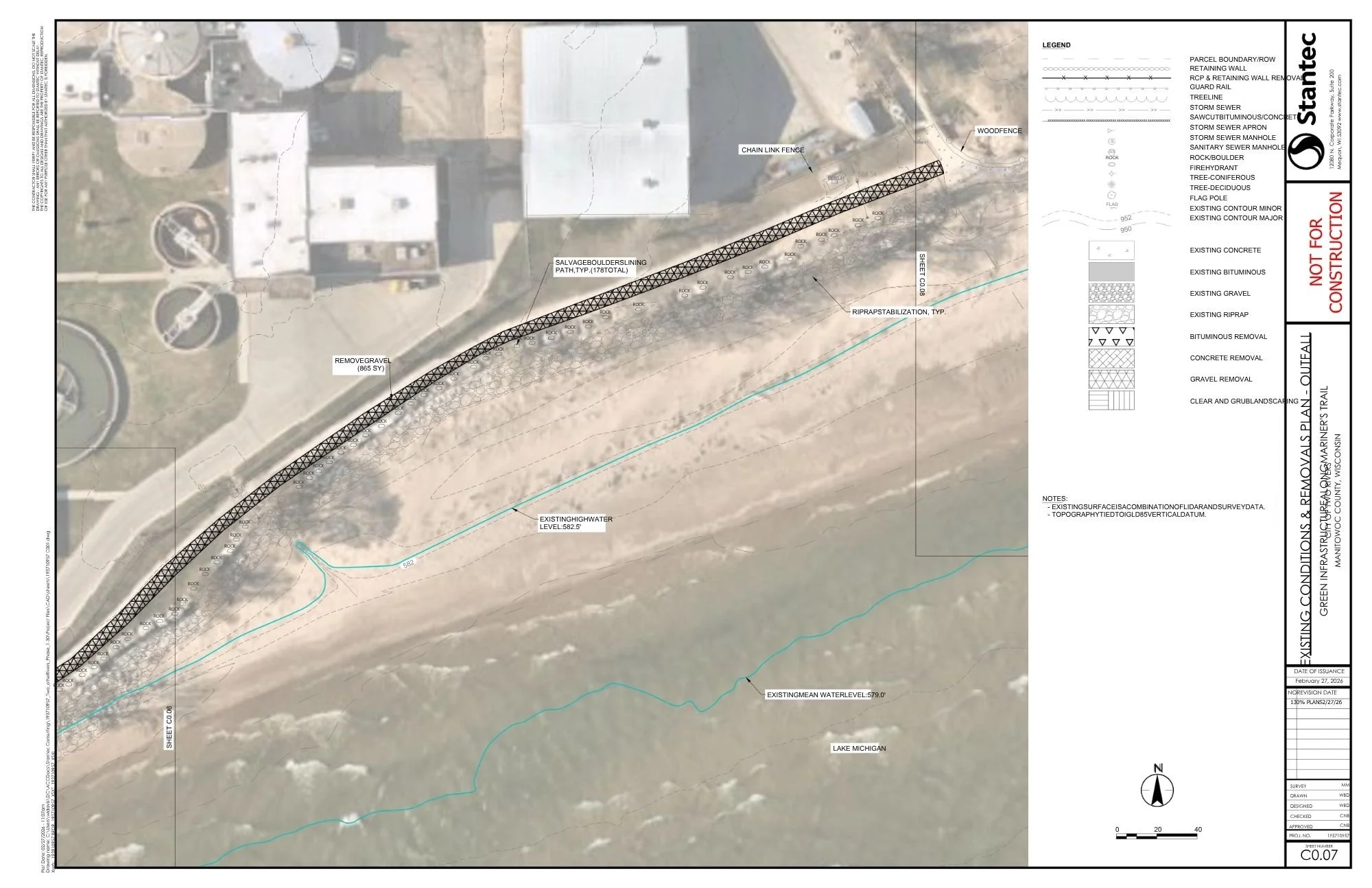
This largely unused parking lot is undergoing construction to reduce impermeable surfaces by over 50% through the removal of the concrete pavement. The City of Two Rivers initiated construction in the fall of 2025. The former parking lot will soon become an expanded area of native plant prairie. A section along the Mariners Trail path was previously restored as native prairie habitat, with the help of Stantec, and this area will increase in size in the spring of 2026. Native prairie plant seeds will be used to further restore this habitat.
Educational Signage
Educational signage is being installed at Area 1 to inform trail users about the importance of prairie habitat and the ongoing construction.
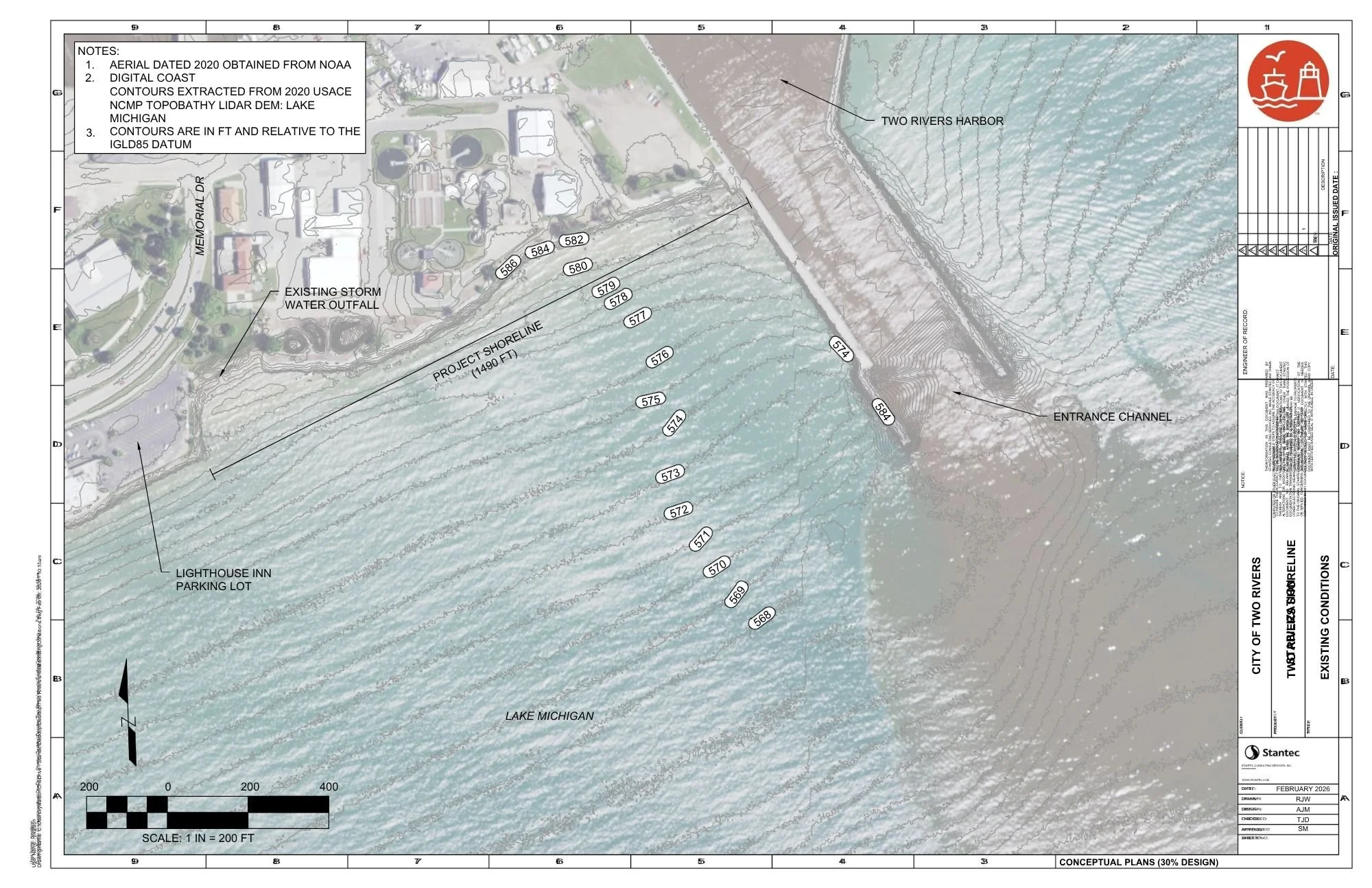
30% Designs - Shoreline Stablization
These early-stage designs evaluate stabilization methods and coastal resilience through the hard work of our engineer team at Stantec.
Grant applications for final design are being submitted in late March.
Cost
Total Construction Cost Estimates
(USD in 2026)
Beach Fill
Breakwaters
Jetty Extension
Beach Fill + Breakwater
Beach Fill + Breakwater + Jetty Extension
Low
$2,630,000
$3,960,000
$3,470,000
$6,590,000
$10,060,000
High
$4,410,000
$6,840,000
$6,095,000
$11,250,000
$17,345,000
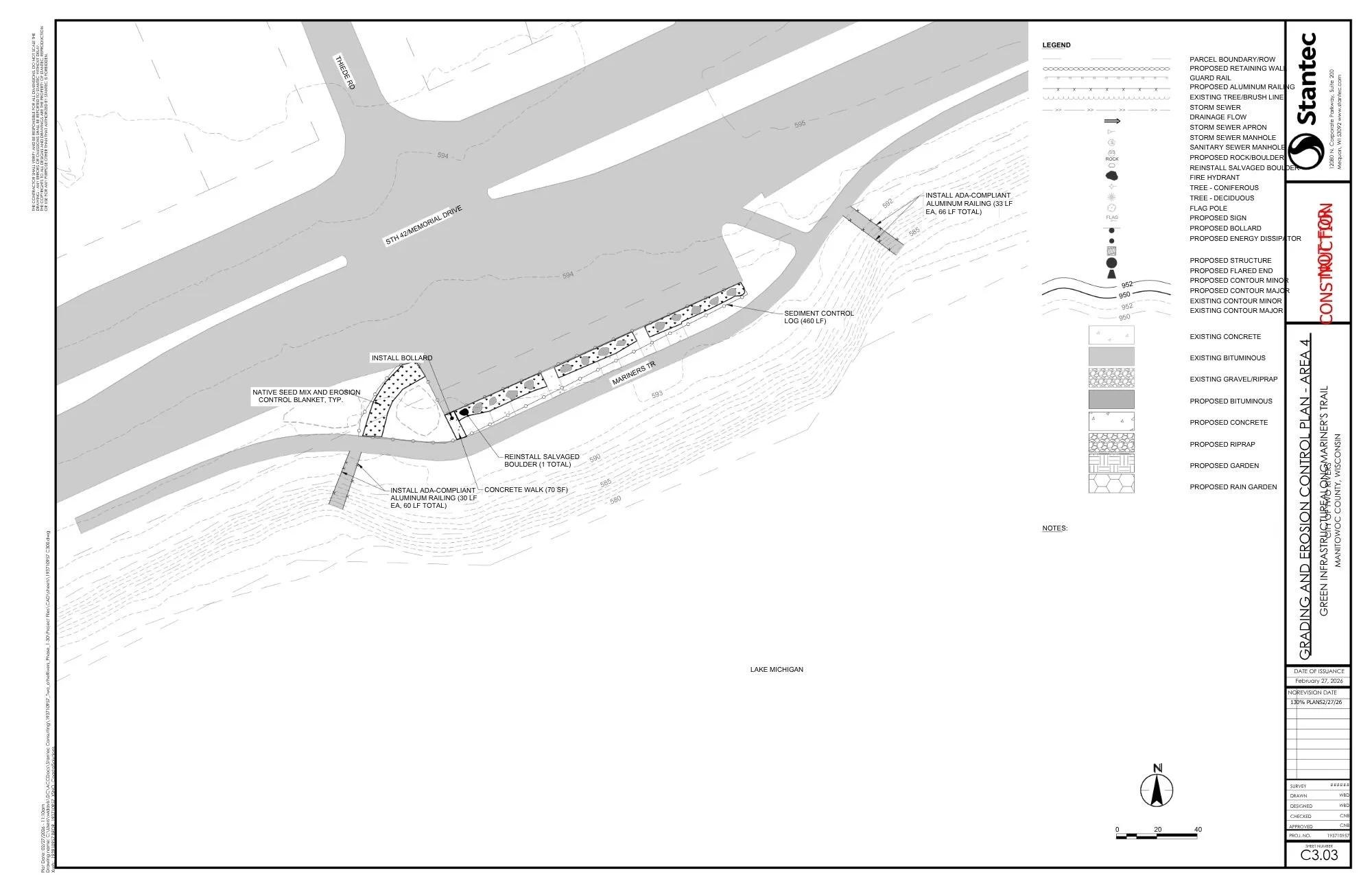
Assumptions:
Construction costs are based on 30% design and subject to change as design advances.
Beach fill is priced assuming the fill comes from an inland source.
Jetty extension is assumed to consist of armor stone only. The design may be revised in more advanced design phases.
Jetty extension would require dredging of the new, realigned channel. This cost is not included.
Hayton Quarry is one of the closest quarries to Two Rivers. All materials are assumed to come from this quarry.
Armor and filter stone for the breakwaters and jetty extension are assumed to be trucked from Hayton Quarry to Manitowoc Harbor and barged to project site.
Detail design and permit application fees are not included.