One Small Scrape for a Lake, One Giant Leap for Water Quality (at Elkhart Lake)
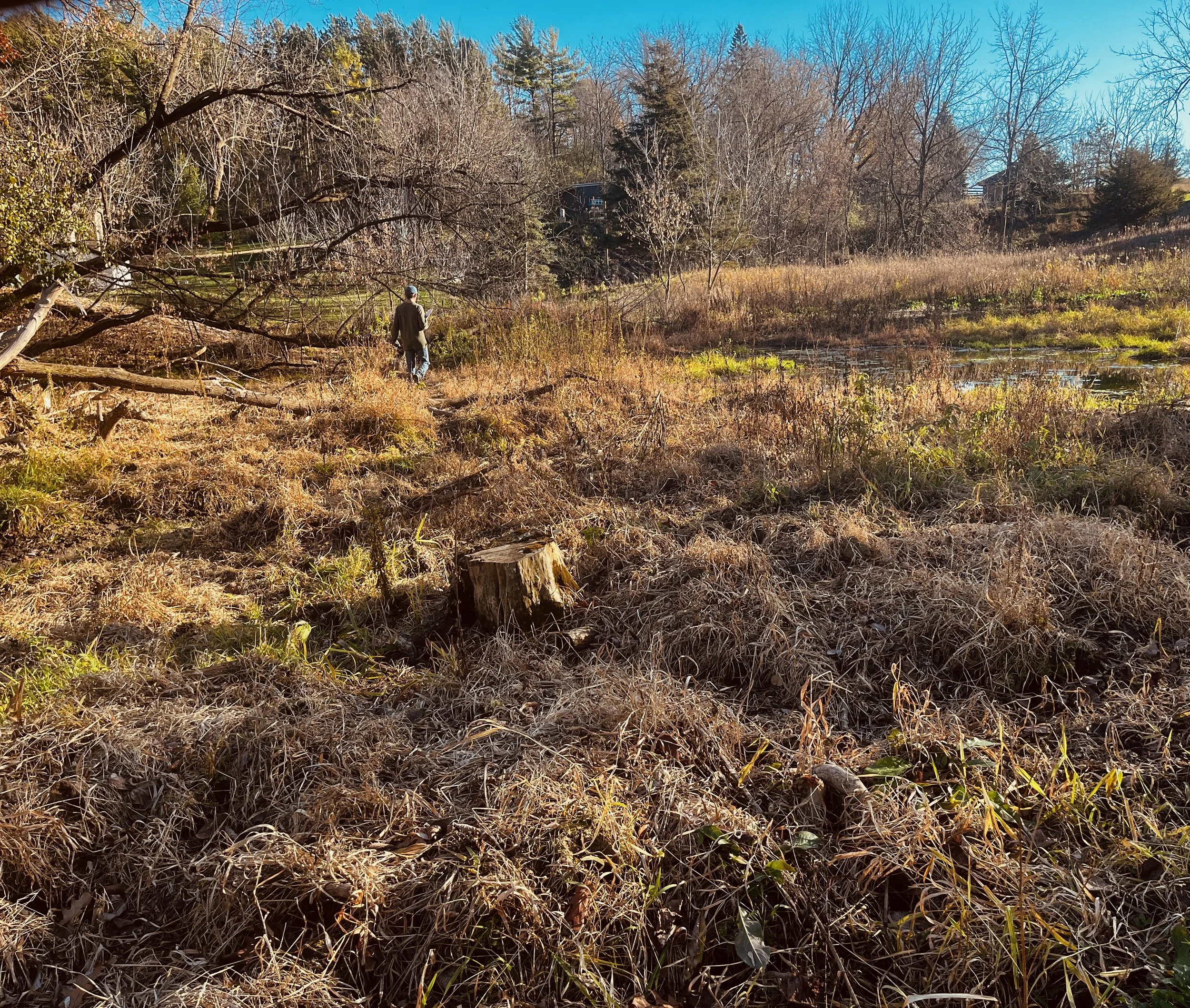
Dan Scheiman, LNRP’s Restoration Director, assessing the site.
The peaceful blue waters of Elkhart Lake make it a popular vacation destination. But something sinister lies beneath, threatening water quality and recreation. For more than a century, phosphorus has been accumulating in the lake through stormwater runoff and underground seepage. Phosphorus is commonly in fertilizers applied to farms and lawns across the lake’s watershed. Excessive phosphorus in the water fuels algal blooms that are not only unsightly but also reduce dissolved oxygen, causing fish die-offs.
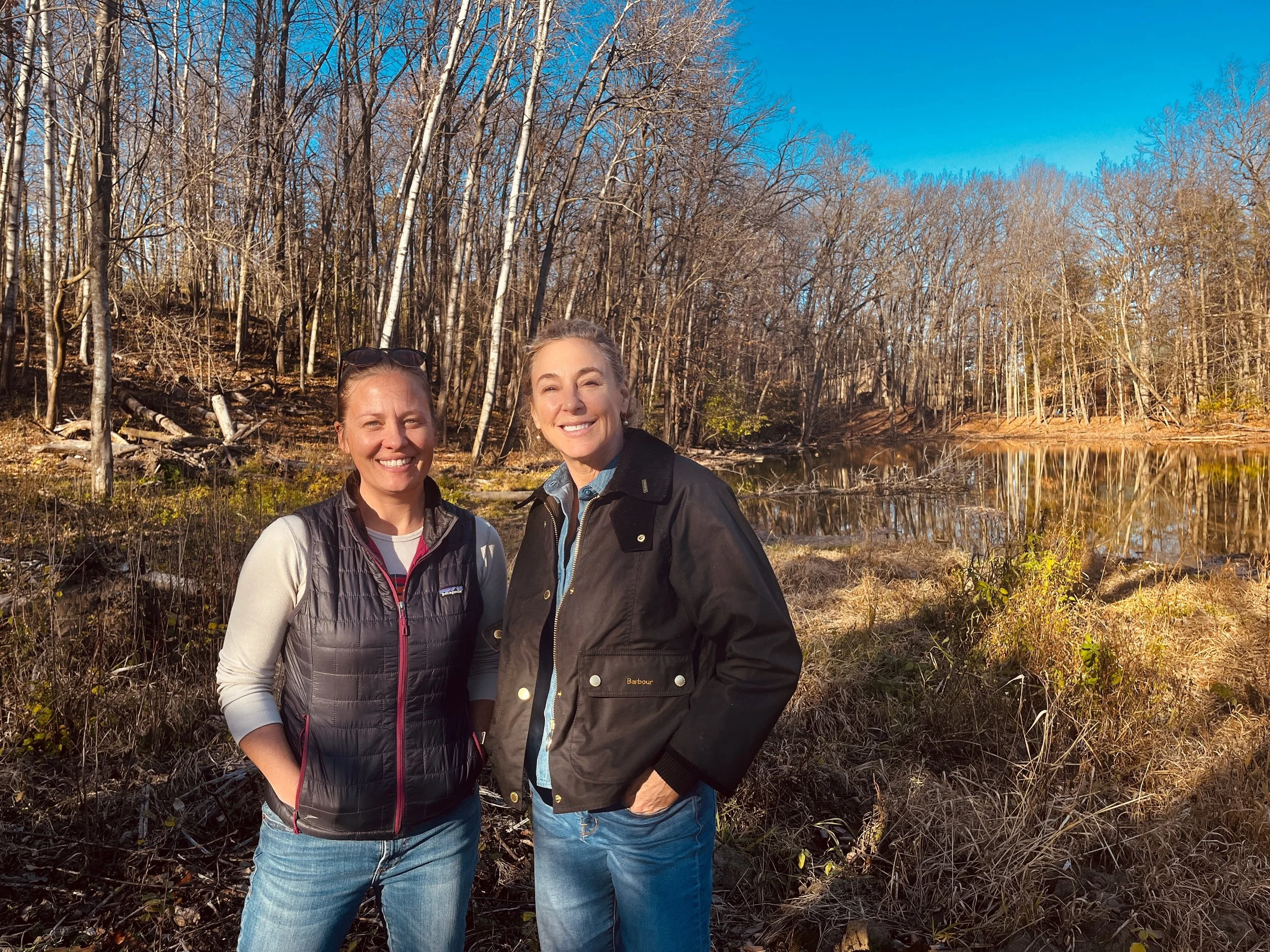
Sarah Majerus and Kim Elias of ELIA
Lakeshore Natural Resource Partnership (LNRP) partnered with Elkhart Lake Improvement Association (ELIA) to reduce this lingering pollutant. ELIA is a volunteer group whose mission is to promote, preserve, and enhance the general welfare of Elkhart Lake and the community around it by improving water quality, water safety, environmental stewardship, and public education. ELIA funded a Comprehensive Lake Management Plan that evaluated historical data. LNRP obtained funding to conduct new water and sediment sampling. Together, the analyses identified the sources of phosphorus and priority areas to treat.
In 2025, LNRP organized a project to address the runoff issues on the south end of the lake off Shoreland Road. The data indicated that a gully discharged a considerable amount of sediment and phosphorus to the lake during storms. Modeling suggested that restoring this area could reduce total sediment loading by 27 tons per year and phosphorus by 59 pounds per year, a reduction in total phosphorus loading of 3%. Considering that the goal for the watershed is a 6% reduction, this single project is a decisive step in the right direction!
LNRP secured funding from the Wisconsin Department of Natural Resources and the Sheboygan County Stewardship Program. ELIA provided additional funds and secured the cooperation of three landowners. Stantec, EcoWaterway Services, and Landmark Landscapes were hired to implement the plan.
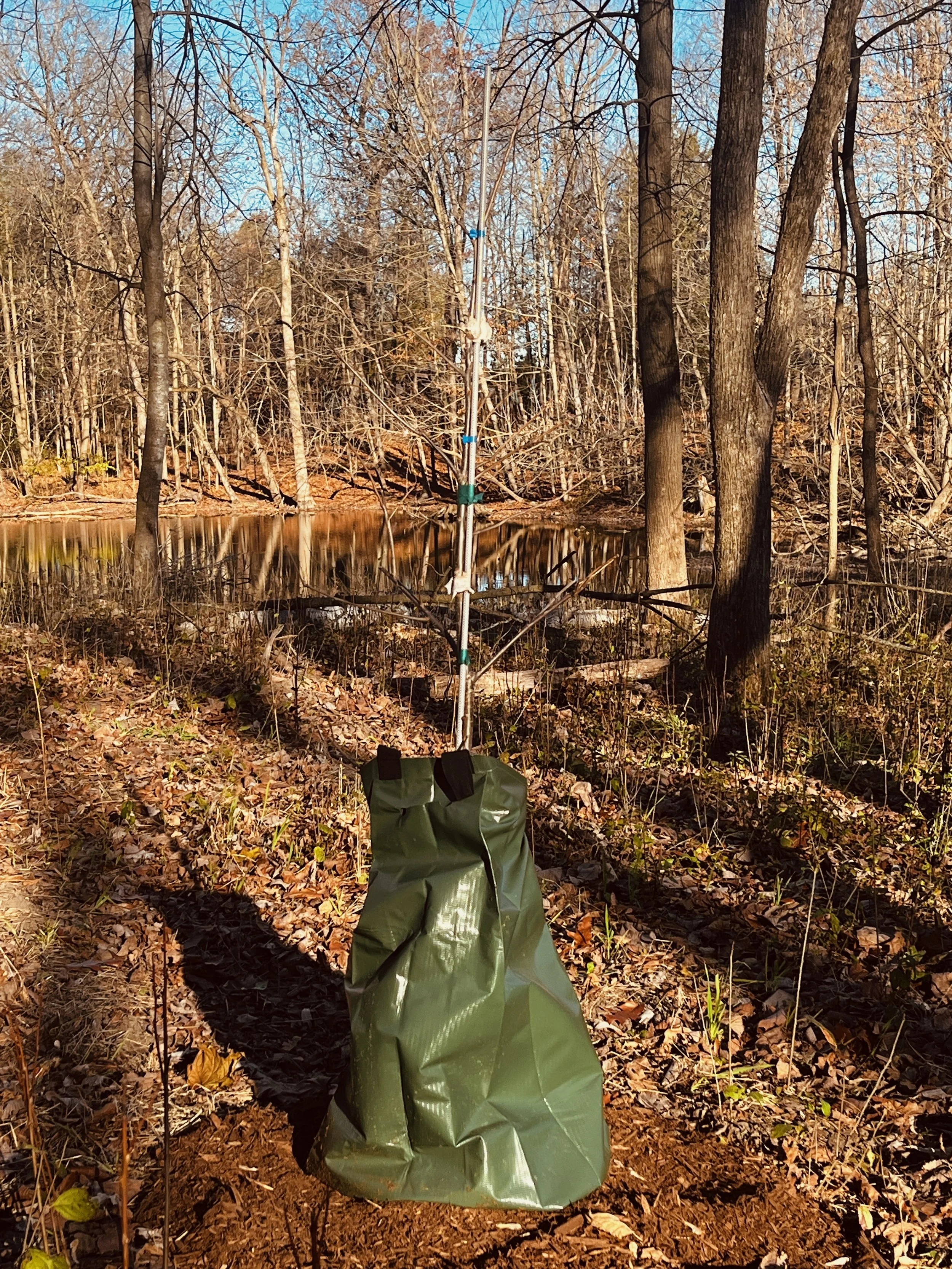
A planted tree in the restoration area.
The plan included three key strategies for remediating storm runoff and reducing the amount of phosphorus entering the lake. First, buckthorn and reed canary grass were treated on 1.5 acres to prepare the site for implementation of the next two strategies. Second, a 1-acre wetland scrape was created by excavating and dredging the phosphorus-rich sediment. A wetland scrape is a shallow depression that fills with water seasonally and remains damp year-round. Finally, native wetland meadow and marsh seeds, plugs, and trees were planted in fall 2026. Once these native plants mature, they will develop deep root systems that will help hold soil in place, soak up excess phosphorus, and filter rainwater before it flows into the lake.
ELIA will follow up with additional herbicide treatments as needed to manage invasives. They will also collect water samples to be analyzed for phosphorus and total suspended solids to compare pre- and post-construction water quality. They continue to educate residents and visitors about all the ways they can help keep the lake clean and actively work with farmers across the watershed to focus on soil health and habitat restoration. These projects will have a significant and lasting impact on the water quality in Elkhart Lake.