Posts in Newsletter
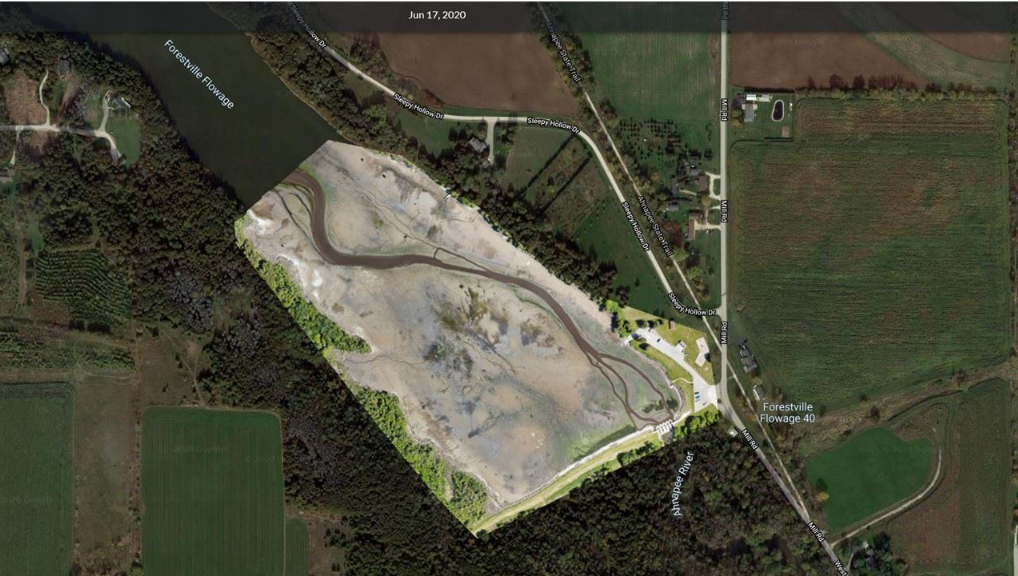
Project Update — Post-Drawdown Study of Forestville Pond in Progress

The Door County Soil and Water Conservation Department (SWCD) is conducting a study to evaluate post-drawdown conditions of the Forestville Millpond. Results will be used to assess changes in water quality, clarity, depth, aquatic plant community, and the overall health of the waterbody. Project deliverables will include a final report on the collected data and an analytical comparison to historic results.

Read More
Project Update — A Successful 2023 Lakeshore Water Summit

The Lakeshore Water Institute, a collaboration between Lakeshore Natural Resource Partnership (LNRP) and UW-Green Bay Manitowoc, hosted the annual Lakeshore Water Summit on Wednesday, October 11th. The summit provided a forum for students, who call themselves the “Stream Team,” to present on data that they collected and analyzed over the summer.

Read More
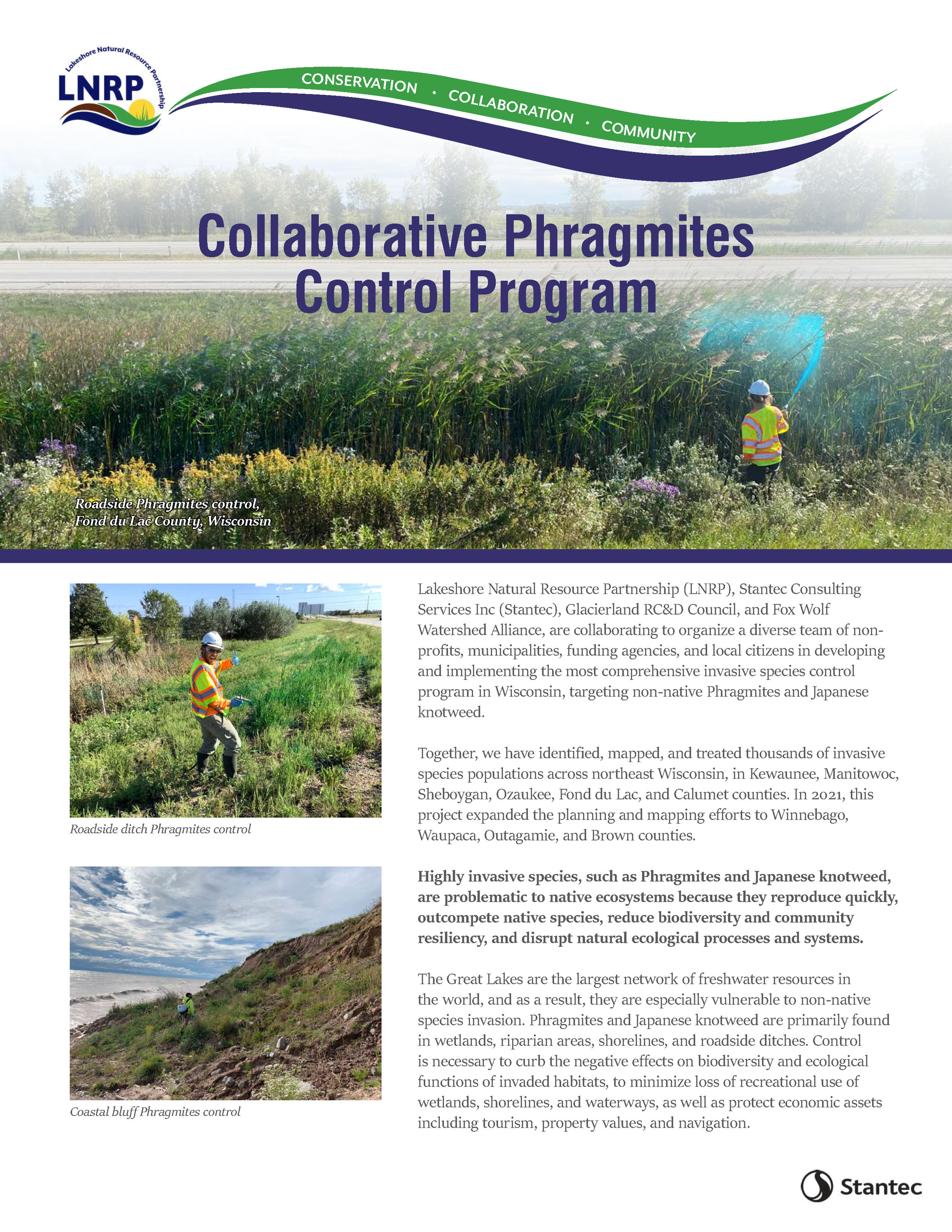
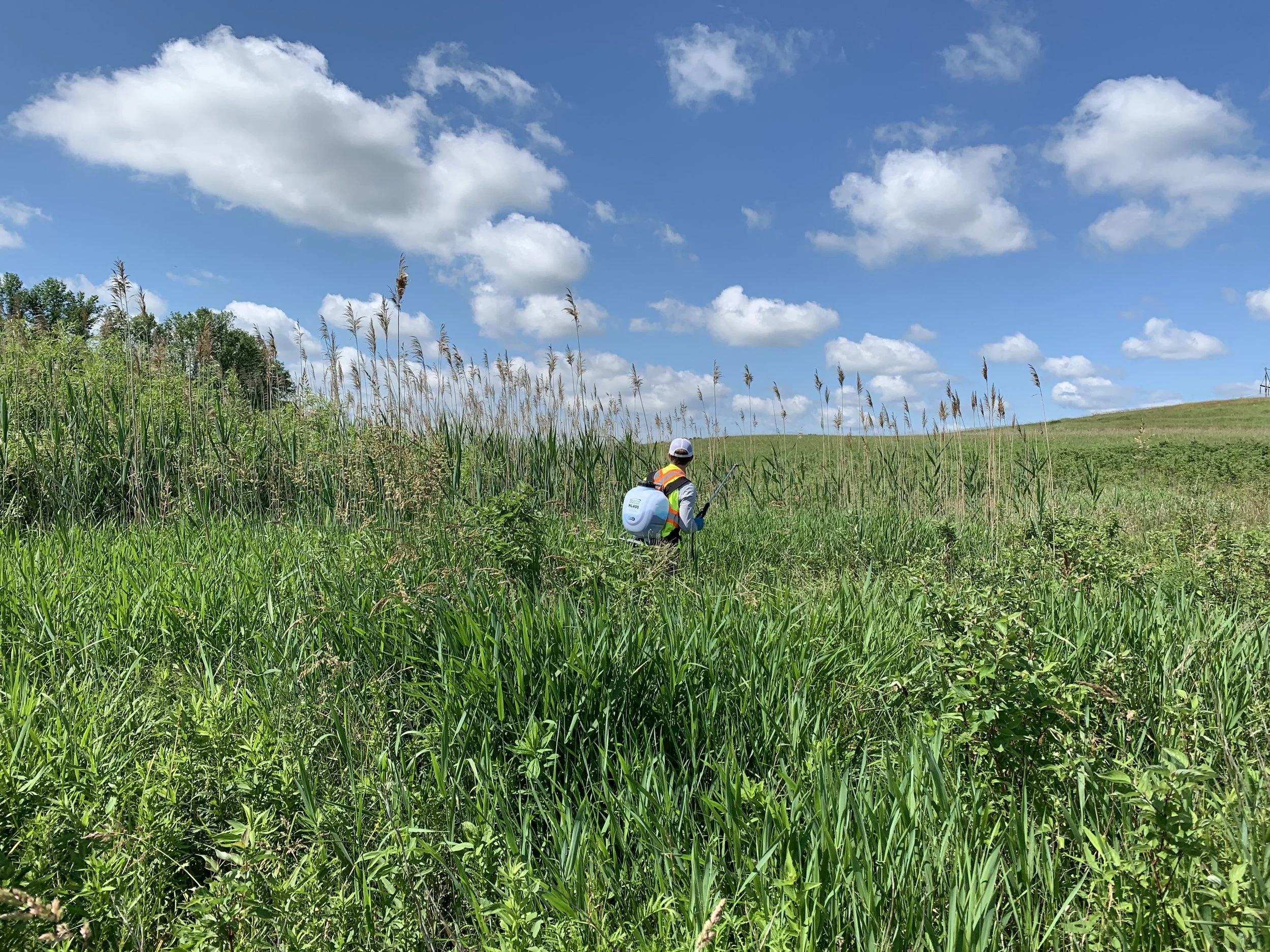
Project Update — Eradicating Invasive Phragmites from Calumet County & Northeast Wisconsin

Calumet County is partnering with Lakeshore Natural Resource Partnership, Glacierland Resource Conservation and Development Council and Stantec Consulting Services Inc. to map and treat invasive Phragmites across the county. Invasive Phragmites is a tall, colony-forming grass, introduced from Europe, that is invading both urban and rural areas. By mapping, treating, monitoring, and providing long-term control of these invasive populations, this project will have significant long-term benefits for migratory shorebirds, waterfowl, marsh spawning fish, pollinators, and other native fauna.

Read More
An Open Autumn Letter... Message from the Board President

The seasons are most definitely turning. Change is something that happens whether (or “weather”) we like it or not, and being hearty Wisconsinites, we generally know how to adapt to change. As LNRP approaches the end of its 20th anniversary year, the board of directors and staff are also embracing some big changes; changes that are opening important opportunities for us as we look toward the future with optimism and great anticipation… as well as with open eyes to the challenges that continue to drive us as an environmentally-focused nonprofit.

Read More
Reflecting on 20 Years of Impact

For 20 years, LNRP has been committed to the ideals of conservation, collaboration, and community as we serve 2,400 square miles of the Lakeshore Basin. You can find an overview of our impact here, and we encourage you to explore the 2021-2022 Impact Report for more details, reflections, and voices!

Read More
Springtime Synonyms… Message from the Executive Director

Spring has sprung – and with it, all the requisite synonyms we all use to describe this time of year.  

Rebirth. Reawakening. Renewal. Rejuvenation. Regeneration. Revival. And yes, Restoration.

All of the above words certainly connect intimately to our LNRP mission. Really, they capture the essence of the transformative community-focused, conservation-based work we do with our partners, friends, and supporters like you…

Read More
Meet the New Director of Projects Amy Lentz

Amy Lentz joins the LNRP team with 8 years of experience in non-profit work, primarily in Milwaukee County. Those positions focused on environmental education, youth mentorship, and science communications, as well as political organizing. She has a M.S from UW- Milwaukee’s School of Freshwater Sciences and a B.S from UW-Madison in Environmental Science and History.

Read More
Project Update — Coastal Resilience Community Impact Project

Extreme precipitation events, coastal storms, and fluctuating water levels pose threats to Lake Michigan coastal communities. Flooding, erosion, and storm surge can threaten properties and impair infrastructure and other assets that are vital to the region’s economic security. Agricultural and urban runoff during heavy rain events can also impair water quality in receiving water bodies, further threatening recreation and tourism. Planning, preparing for and adapting to these and other climate change hazards can enhance community resilience and strengthen coastal economies.

Read More
Project Update — Carstens Lake Water Quality Improvement Project

The Lakeshore Natural Resource Partnership (LNRP), Stantec, and the University of Wisconsin – Stevens Point (UWSP) are collaborating to improve water quality in Carstens Lake and Lake Michigan. A study identified high phosphorus levels in Carstens Lake, leading to the construction of an offline sedimentation basin and the use of UWSP's sorption technology to reduce contamination. The project aims to protect the lakes, create wildlife habitat, and diversify land use. Construction is set to begin in fall 2023 with two years of monitoring. LNRP also plans to enhance a degraded wetland area for additional water quality benefits and habitat value.

Read More
Project Update — LNRP and Stantec Work Together on Projects in the Lakeshore Basin

LNRP and Stantec Consulting Services have created project summaries showcasing collaborative initiatives in the Lakeshore Basin. The summaries cover projects funded by the US Forest Service and the Wildlife Conservation Society's Climate Adaptation Fund, a regional Collaborative Phragmites Control Program, and the Amsterdam Dunes Preservation Area Habitat Restoration project. These projects aim to enhance coastal ecosystems, control invasive species, and protect critical habitats for migratory birds in the Lakeshore Basin.

Project summaries were developed to showcase several collaborative projects in the Lakeshore Basin.

Read More
Partner Update — Friends of North Point: Winter Speaker Series

The Friends of North Point (FONP) concluded their winter speaker series, featuring three speakers in 2023 focusing on native plants and plant management. The first speaker, Jason Granberg from the Wisconsin DNR, discussed the identification and control of invasive species, emphasizing the importance of early detection. Dr. Warren Porter from UW-Madison addressed the effects of pesticide use on human reproductive health and development, highlighting the potential risks associated with common pesticides. The final speaker, Randy Powers from Prairie Future Seed Company, discussed sustainable practices for creating native landscapes on properties, showcasing the benefits of native plant gardens.

Read More